An e-publication by the World Agroforestry Centre
AGROFORESTRY IN THE HIGHLANDS OF EASTERN AND CENTRAL AFRICA


|
|
An e-publication by the World Agroforestry Centre |
|
AGROFORESTRY IN THE HIGHLANDS OF EASTERN AND CENTRAL AFRICA
|
|
|
4. SUMMARIES OF TECHNICAL PRESENTATIONS 4.4 Soil fertility and erosion technologies Performance of hedgerow species and their effect on crop yields grown
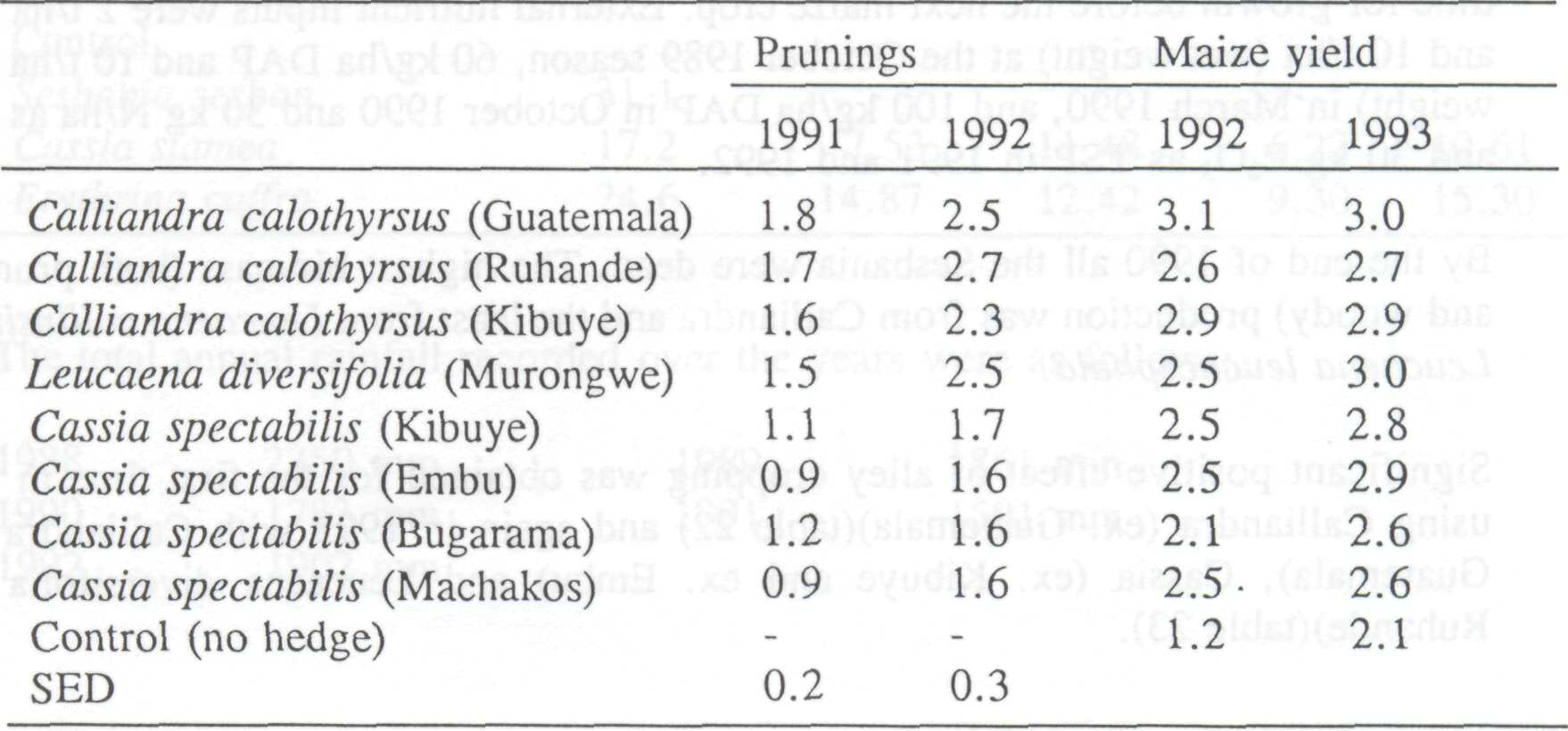
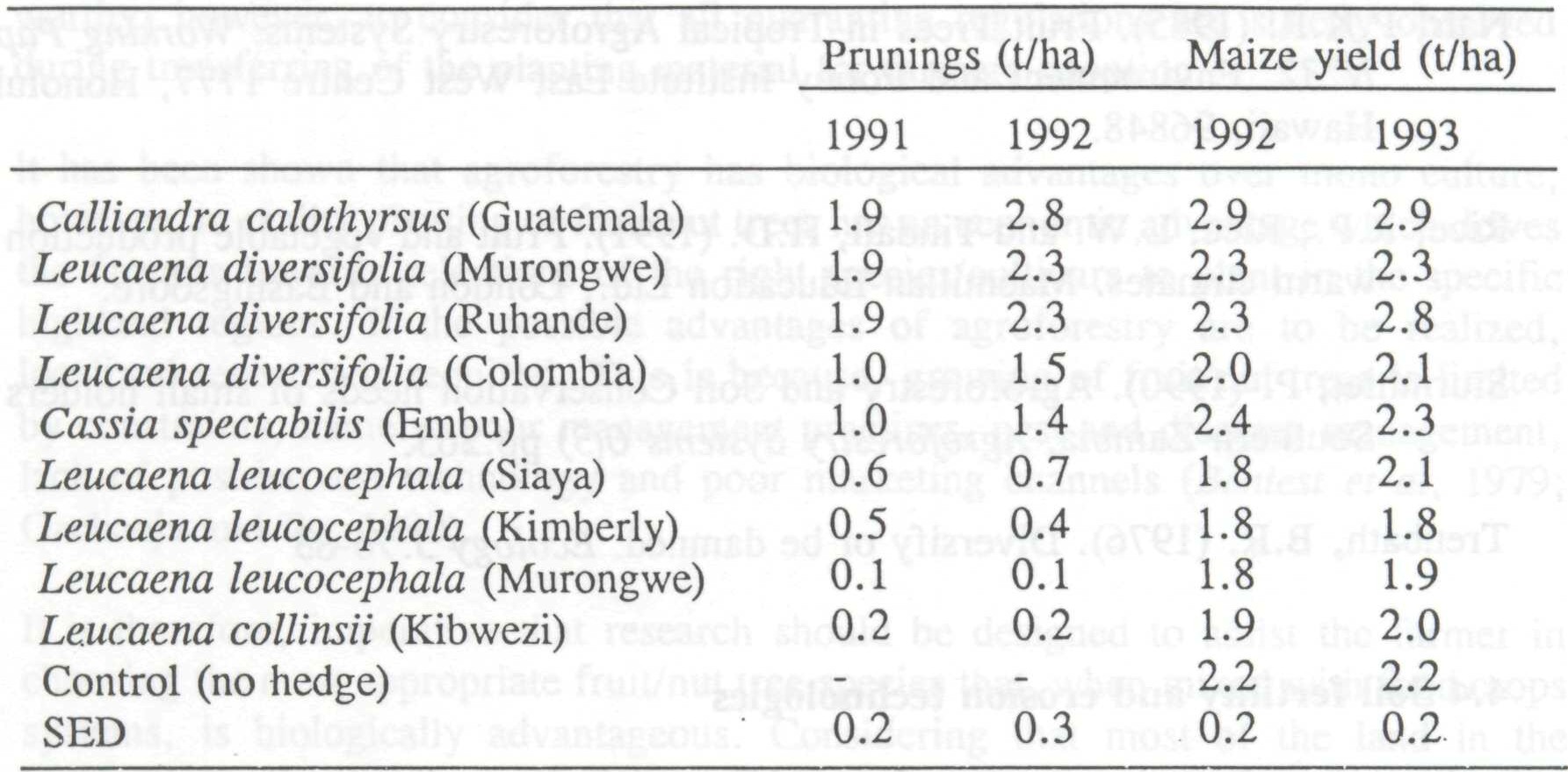
in their alleys in the highlands of Burundi Hitherto, the main species used in alley cropping trials has been Leucaena leucocephala. The need to broaden the germplasm base for this technology has been re-enforced by the outbreak of psyllid (Heterosphylla cuband). Two experiments were conducted in the highlands of Burundi to evaluate promising MPTS for alley cropping. These trials were conducted in Mashitsi, Burundi. In the first experiment, provenances of Calliandra calothyrsus, Cassia spectabilis, and Sesbania sesban were evaluated (table 22) and provenances Leucaena diversifolia and Leucaena leucocephala in the second (Table 23).
Table 23. Dry weight of prunings harvested from Experiment 2
Apart from the species/provenances tested which were different in the two experiments all other details were similar. Randomized complete block design and three replicates were used. A plot consisted of 2 hedges 4 meters apart. Each hedge was 5 m long and the plants were spaced 0,50 m within the hedge. Two meters of plot was left on the non-alley side of each hedge giving a total plot width of 8 m. Hedges were established at the end of November 1988 and were cut back for the first time in October, 1989. Subsequent cut-backs were in February, October and December in 1990, October and December in 1991 and December 1992 and January, 1993. The cropping sequence was maize during the first season (March to June) and maize in the second (October to March). After 1990, the first season was no longer cropped rather plots were fallowed because maize was harvested too late (April) to permit the sowing of beans (unless relay cropping is done). This also allowed the hedges more time for growth before the next maize crop. External nutrient inputs were 2 t/ha lime and 10 t/ha (wet weight) at the October 1989 season, 60 kg/ha DAP and 10 t/ha (wet weight) in March 1990, and 100 kg/ha DAP in October 1990 and 30 kg N/ha as urea and 30 kg P2O5 as TSP in 1991 and 1992. By the end of 1990 all the Sesbania were dead. The highest biomass (both prunings and woody) production was from Calliandra and the least from Leucaena collinsii and Leucaena leucocephala. Significant positive effect of alley cropping was obtained for the first time in 1992 using Calliandra (ex. Guatemala)(table 22) and again in 1993 with Calliandra (ex. Guatemala), Cassia (ex. Kibuye and ex. Embu) and Leucaena diversifolia (ex. Ruhande)(table 23). Residual effects of Sesbania sesban in hedgerow species screening
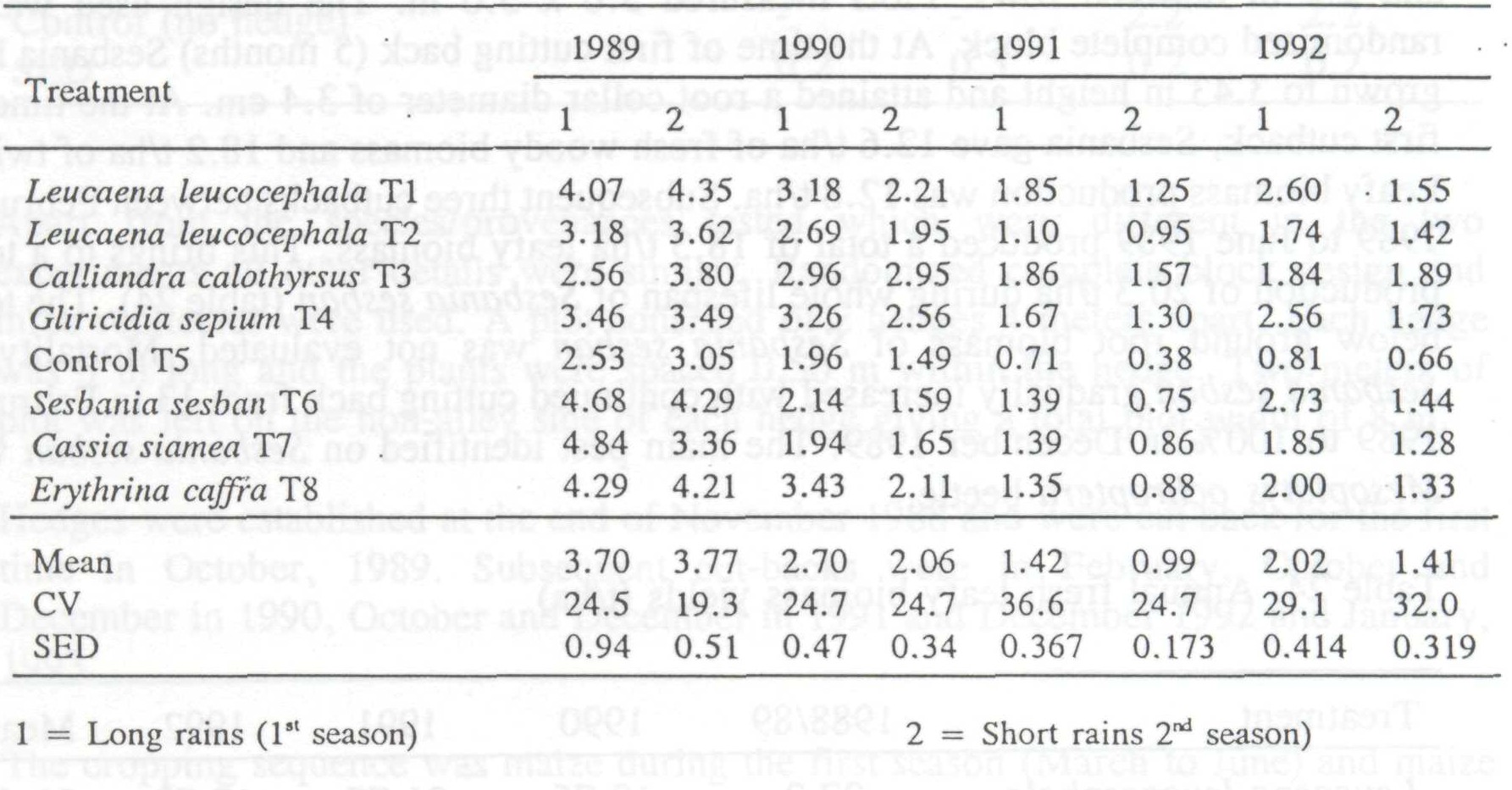
trial at Maseno, Kenya Sesbania sesban is one of the most promising species for improved fallow system. It is well known to farmers around Maseno since it is commonly left to grow with crops on farms in scattered arrangement. The farmers are aware of its soil improvement properties in addition to providing them with fuelwood. It is one of the species the Multipurpose Tree Management and Improvement Programme is working on. Seeds are locally available from the farms. Sesbania sesban was planted with other six species and provenances in a trial to screen species for hedgerow intercropping. The trial was set up in April 1988. Survival at planting was almost 100%. Trees were spaced at 0.25 m within the rows and 2.8 m between rows. Plots measured 5.6 x 5.0 m. The design used was a randomised complete block. At the time of first cutting back (5 months) Sesbania had grown to 3.43 m height and attained a root collar diameter of 3.4 cm. At the time of first cutback, Sesbania gave 12.6 t/ha of fresh woody biomass and 18.2 t/ha of twigs. Leafy biomass production was 12.8 t/ha. Subsequent three cutbacks between February 1989 to June 1989 produced a total of 18.3 t/ha leafy biomass. This brings to a total production of 20.3 t/ha during whole lifespan of Sesbania sesban (table 24). The total below ground root biomass of Sesbania sesban was not evaluated. Mortality of Sesbania sesban gradually increased with continued cutting back from 13 in February 1989 to 100% in December 1989. The main pest identified on Sesbania sesban was Mesoplatys ochroptera beetle. Table 24. Annual fresh leafy biomass yields (t/ha)
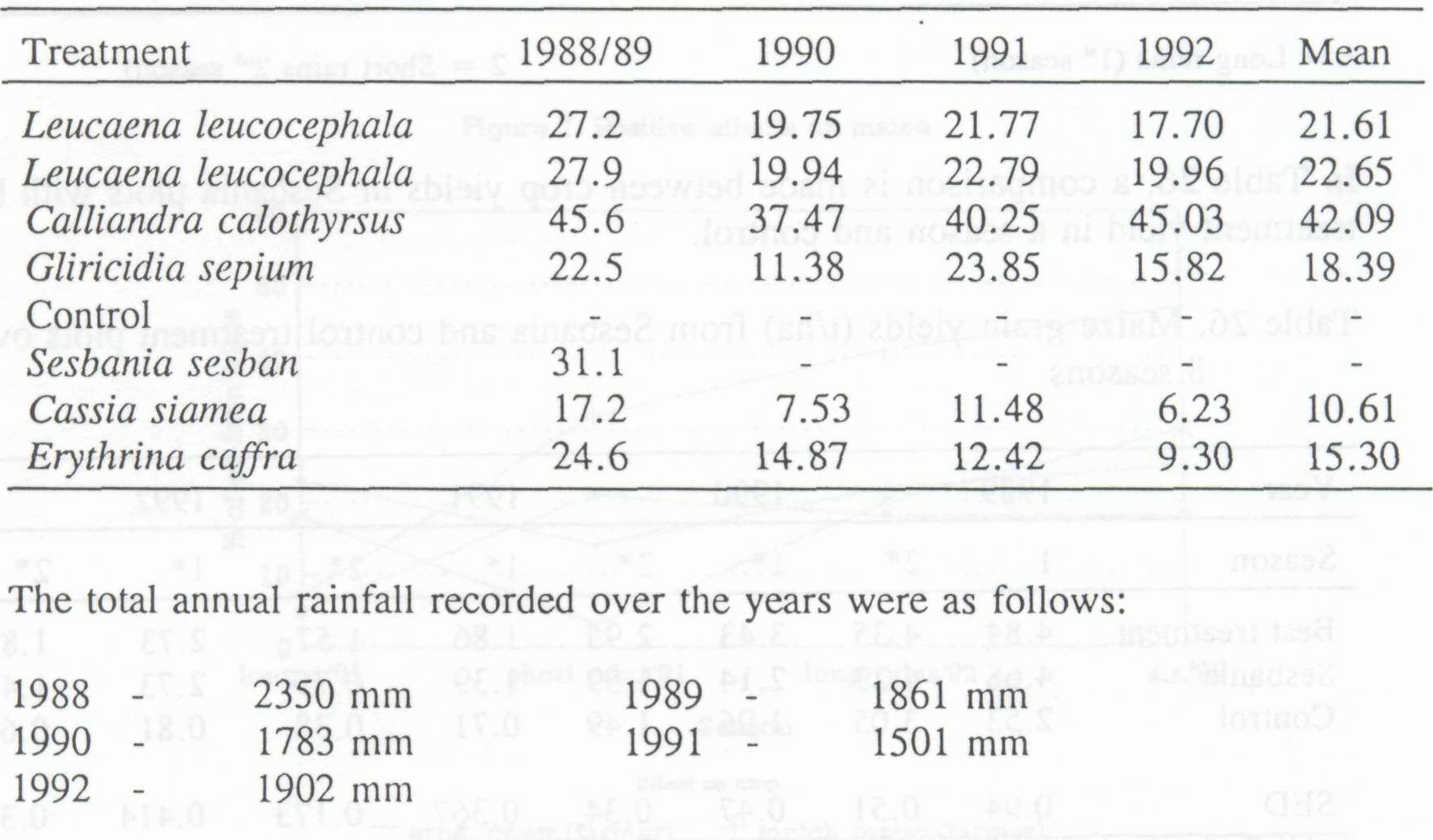
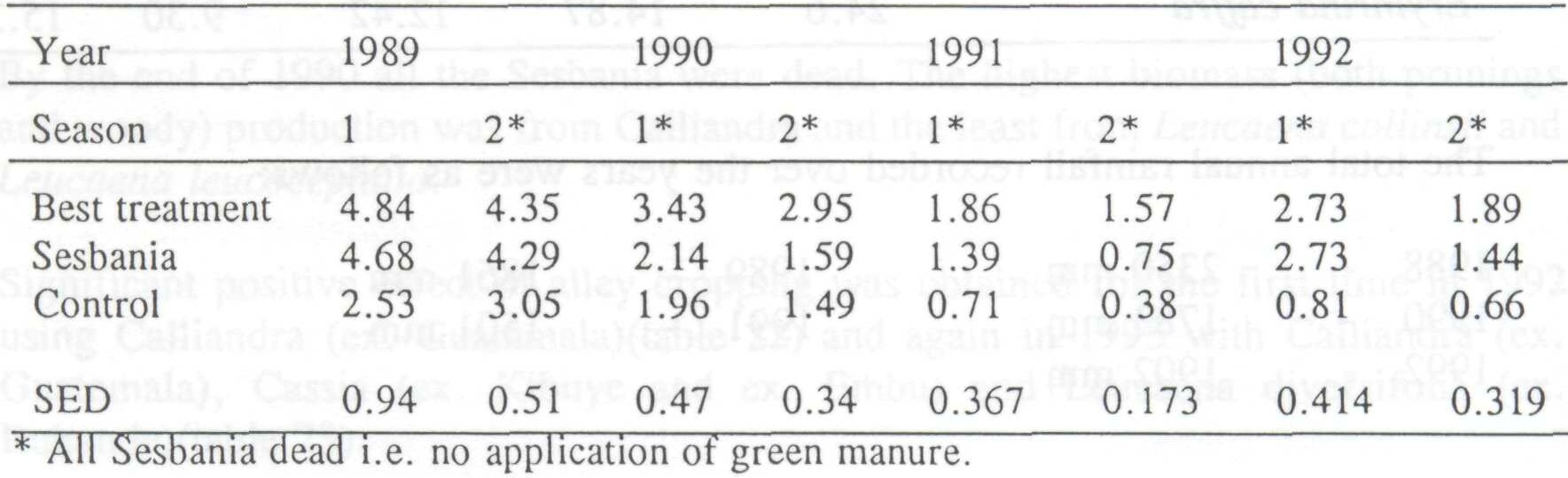
The five year means was 1879 mm. The crop yields dropped over time but was maintained at a higher level that the control plot. It should also be noted that the first crop of 1989 was fertilized. The maize yields in former Sesbania plots remained higher than the control plot yields over the whole period. The leap in maize yields during the first season of 1992 was remarkable and was higher than most other treatments with tree hedges. This, coming five cropping seasons after Sesbania stumps were removed points out to the long residual effects of Sesbania sesban. The potential of Sesbania in improved fallow system is thus implied. Table 25 below gives crop yields of all treatments in the experiment. Table 25. Dry maize grain (13% m.c.) yields in tons/ha over eight cropping seasons
In Table 26, a comparison is made between crop yields in Sesbania plots with best treatment yield in a season and control. Table 26. Maize grain yields (t/ha) from Sesbania and control treatment plots over 8 seasons
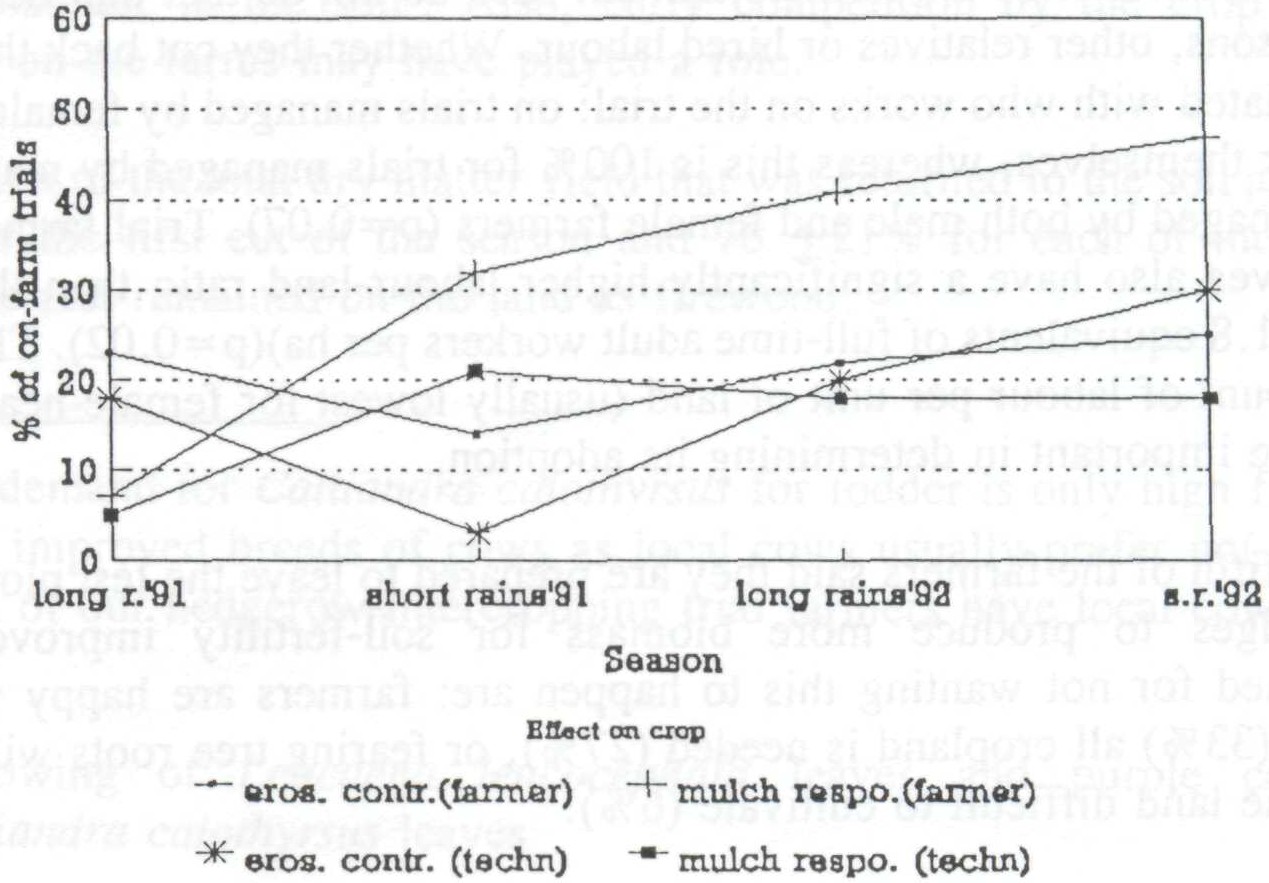
Farmer-managed hedgerow-intercropping trials using Calliandra calothyrsus and Leucaena leucocephala were established on 50 farms in 1990/91. Hedges were planted from seedlings at 4 - 4.5 meters between rows and 40 cm between trees within-row. Evaluations relied mainly on farmer assessments, labour and other-input data and tree production data; crop yield comparisons between test and control appeared not to be useful as comparisons between test and control plots were confounded by a number of factors (difference in inherent fertility, management and crop combination). Farmer assessments involved a formal interview of each trial farmer at the end of each season whereby the opinion from both male and female farmers as well as the project's technician is asked on the performance of the technology. Over the past four seasons, an increasing number of farmers have noted a positive increase in maize yield due to the hedges (figure 7). Last season (short rains of 1992) almost 50% reported increases but the technicians noted increases in only 20% of the trials. This indicates that there may be a bias and that the farmers are trying to please the researchers by giving positive answers. The technicians most commonly have seen no effect at all (40% of the trials)(figure 8). They saw an erosion-control effect by the hedges on 30% of the farms; this was confirmed by 25% of the farmers (figure 7). Earlier calculations showed that a maize yield increase of 18% is needed to breakeven (to equal benefits to costs) and that this is roughly the minimum increase an observer may note. This would mean that according to the technicians on only 20% of the hedgerow-intercropping trials benefits are at least equal to the costs and that on all the others the technology is not profitable.
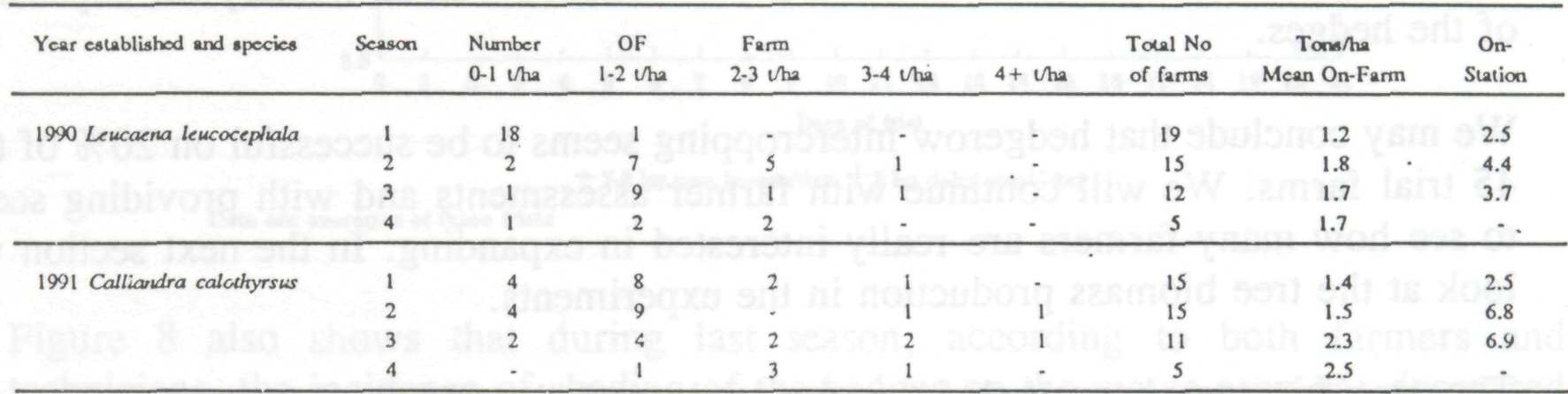
For the past three seasons, 70% of the trial farmers interviewed has said that the hedges did not make land preparation or weeding more difficult. A 20% said weeding is easier because the hedges have made the soil softer and 10% said it is easier because the amount of weeds has decreased. Although cutting back two times per season only increases total seasonal labour input by 5%, about half of the farmers that cut back do not do that themselves, but instead rely on sons, other relatives or hired labour. Whether they cut back themselves or not is associated with who works on the trial: on trials managed by females only one third cut back themselves, whereas this is 100% for trials managed by males and 50% for trial managed by both male and female farmers (p=0.07). Trial farmers that cut back themselves also have a significantly higher labour-land ratio than those that do not (4.9 vs 1.8 equivalents of full-time adult workers per ha)(p=0.02). This indicates that the amount of labour per unit of land (usually lowest for female-headed households) might be important in determining its adoption. Only a fifth of the farmers said they are prepared to leave the test plot fallow to allow the hedges to produce more biomass for soil-fertility improvement. Reasons mentioned for not wanting this to happen are: farmers are happy with the present system (33%) all cropland is needed (27%), or fearing tree roots will be too big and make the land difficult to cultivate (6%). Over the past three seasons, browsing continued to be a minor problem. Trees were damage antelopes (13%) or own livestock (12%) on 25% of the trial farms. Like the previous season, a quarter of the farmers suggested that if they were to experiment again they would like to plant the hedges wider apart than the present spacing of 4 - 4.5 meters between the hedges. About two thirds said they are interested in planting more hedge trees (Calliandra calothyrsus, as Leucaena leucocephala is now badly affected by the psyllid). A third want them for soil-fertility improvement, 7% said they want more hedge trees for fodder, 6% wants it for firewood and 6% wants them for soil erosion control2. Calliandra calothyrsus tree seeds were given to 40% of all hedgerow-intercropping trial farmers and about 20% have actually established a small nursery for expansion of the hedges. We may conclude that hedgerow intercropping seems to be successful on 20% of the 45 trial farms. We will continue with farmer assessments and with providing seeds to see how many farmers are really interested in expanding. In the next section we look at the tree biomass production in the experiments. The tree biomass harvested from the trials and the distribution across farms is summarized in table 27. The trees were cut back to 50 cm from the ground level approximately six months after planting. Subsequent pruning took place at the start of each season and usually once more during the cropping season depending on regrowth and the farmer's concern about shading on the crop. Biomass productivity varied widely across farms. During the first four seasons, farmers obtained on average the following amounts of mulch: 1.2, 1.8, 1.7 and 1.8 tons/ha/season for Leucaena leucocephala and 1.4, 1.5, 2.3 and 2.5 tons/ha/season for Calliandra calothyrsus. This was 41 - 48% of the leafy biomass obtained in the Maseno on-station experiments for Leucaena Leucocephala and 22 - 56% for Calliandra calothyrsus (table 27). A lower biomass production per ha of the trees on farms might be caused by a lower tree density, poorer soils, less use of fertilizer and in some cases even a nutritional disorder in the soil3. Also, early competition by the crop and earlier cutting back on the farms may have played a role. The proportion of the total dry matter yield that was returned to the soil as mulch was 62 ±5% for the first cut of the season and 76 ±21% for each of the subsequent cuttings. The rest remained on the land as firewood. In short: tree biomass production was considerably lower in on-farm hedgerow-intercropping experiments compared to on-station ones. This could be one of the reasons for its poorer performance. There is clearly a need to identify the main soil factors limiting the growth of multi-purpose trees on depleted soils, test early growth responses of such trees to soil ameliorants and relate nutrient responses to the size of soil-nutrient pools. The effect of coppicing small trees on subsequent shoot growth and root distribution, and the effect of nutrient inputs on subsequent growth of multipurpose trees should be investigated.
Understanding farmers' fallowing practices and the role Sesbania sesban plays in these fallows would be useful for tailoring improved-fallow research. A recent survey among 71 randomly selected farmers in western Kenya supplemented with some informal discussions with 6 farmers provided us with some useful information. In spite of small farms (median is 1.2 ha) and a high population density (about 7 people per ha of farm) not less than half of the farmers do allow land to lie fallow. (Size of fallow land is not known but the Maseno trial farmers fallow about 10-15% of their arable land). Farmers that fallow have a significantly larger total farm size than the ones that do not (2.2 vs 1.3 ha); they also have a higher labour/land ratio (1.5 vs 3.1 equivalents of full-time adult workers). The length of the fallow varies between one season (13% of all farmers) one year (18%) or two or more years (21%). Common reasons for fallow are to allow soil fertility to restore but also lack of labour (and cash to hire it); both were equally important and other reasons were hardly mentioned. When a piece of land gives poor maize yields farmers often plant tubers there (sweet potato, cassava) usually followed by a fallow. However, a fallow may also follow directly after a poor maize crop. Three quarters of the farmers reported they have some Sesbania sesban in the cropland where it often grows naturally and is left at a wide spacing by farmers when weeding the crops. These farmers have a higher labour/land ratio, indicating a more intensive use of the land, than those who do not have any Sesbania (2.5 vs 1.8 equivalents of full-time workers per ha)(anova: p=0.23). A fifth of the farmers also sometimes scatter Sesbania seeds in the cropland. (The difference between natural regrowth and actively sowing is, however, vague as even when big tree branches are cut and carried away, Sesbania seeds drop on the soil). The main purpose of leaving/ sowing Sesbania scattered in the cropland is firewood production but farmers are also aware of the beneficial effects of this tree on crops. When the land is left fallow the Sesbania is allowed to grow big and multiply itself by shattering its seed. Farmers are aware that this speeds up soil fertility restoration. After a fallow all Sesbania are cut and the land is prepared. New Sesbania trees will then appear soon in the cropland germinating from the seeds spread by the big trees during the fallow. We do not know how many farmers are actually sowing Sesbania in the cropland just before a fallow in order to obtain a denser stand of it and a faster soil-fertility restoration as well as a higher firewood production. The impression is, however, that this is hardly done. Our hypotheses are that this may be due to:
Conclusion: in spite of high population densities it is worth pursuing improved-fallow technologies. Further informal discussions with farmers will hopefully shed some more light on the adoption potential of dense Sesbania fallows. Selection of herbaceous and shrub species in coffee plots for mulch
production The objective of these two trials was to select herbaceous and shrub species capable of producing high biomass to serve as mulch, less competitive viz a vis the coffee plots and also to allow for the maintenance or improvement of the coffee production. The two trials were installed at Rubona. Eight herbaceous and 8 shrub species and provenances were compared with the controls. The site was of complete randomized blocks, each trial comprising 3 blocks. The elementary plot was composed of 2 rows of coffee, in the middle of which there was a row of either trees or shrubs. Three years after installation of these trials, the results obtained showed that the shrub species most susceptible to frequent cutting was Desmodium distortum, which started withering from the first cut and which had a survival rate of 46.4% at 19 MAP and 8.2% at 36 MAP. It was followed by Tephrosia vogelii which withered rapidly during the third year: 89.3% survival rate at 23 MAP and 8.2% at 36 MAP. From the point of view of leafy biomass productivity, the most productive herbaceous species were Setaria splendida, Tripsacum laxum and Desmodium intortum which produce respectively 12.53, 9.76 and 6.8 t/ha/year. The least producer species was Macrotyloma axillare with 3.4 t/ha over a period of 3 years. As concerns the shrub species, the most productive species were the 3 provenances of Calliandra and the Leucaena diversifolia, which had productivity varying between 5.29 and 5.96 t/ha/year of dry matter. The least productive species were Desmodium distortion with 2.56 t/ha/year and Gliricidia sepium (2.86 t/ha/year). The first coffee harvests were carried out in the course of the 3rd year following the installation of the trials. These were spread over nearly 10 months between the 31st MAP and the 40V^ MAP. During this period, 12 harvests were carried out. The concurrent harvests revealed that with regard to the shrubs trial, the most productivity in berries than in dry coffee is not statistically different between the treatments. Also, the treatments with Leucaena and Calliandra, Desmodium distortum and Tephrosia vogelii gave slightly better results than the control. In respect to the trial with trees, the production was significantly different from the point of view of berries production (Fpr = 0.089) than of dry coffee (Frp = 0.017). The best results were obtained with Macrotyloma axillare, Stylosanthes guinensis, Glycine wightii and also, with Tripsacum, which had similar production as the control. The most aggressive species were Setaria splendida, Desmodium uncinatum and Desmodium distortum.
Soil fertility decline and soil erosion were identified to be some of the key factors limiting food crop production during a diagnosis and design survey carried out in the coffee-based land-use system (LUS) of Central and Eastern Provinces of Kenya (Minae and Nyamai, 1988). An investigation into how farmers are currently managing these problems was felt to be important for the agroforestry (AF) research project to identify farmers' priorities and preferences. This would help focus the project activities at solving the farmers' priority problems with appropriate interventions through the introduction of improved AF and/or non-AF technologies. It was for this reason that this survey was conducted in Meru District during May, 1992 with the following objectives: a) to identify the types and management practices of trees used by farmers for soil fertility improvement and soil erosion control; b) to identify the non-agroforestry options farmers use to alleviate soil fertility and erosion problems; and c) to assess the farmers' preferences in using agroforestry and non-agroforestry options in solving these problems. Central Imenti Division was selected for the survey as it is one of the major coffee growing divisions in the district. Fifty seven farmers randomly selected from the three coffee growing agro-ecological zones (AEZ) were interviewed. Informal discussions and questionnaires were used to gather the necessary information from key informants and farmers. Most farmers (81%) indicated they experienced soil fertility problems on the farms and as such used different methods of improving the situation. Seventy-two percent of these farmers were able to mention some indicators which showed them that the soil had fertility problems. Low yields especially when no manure or fertilizer is used was mentioned by most farmers. Fertilizer and manure applications were the main means used for soil fertility improvement. The majority of farmers (88%) used fertilizer on coffee. This was followed by maize and potatoes. Relatively few farmers used fertilizer on beans and maize/beans intercrop. Diammonium Phosphate (DAP), Calcium Ammonium Nitrate (CAN), and NPK (mainly 17:17:17 and 20:20:0), were the most common fertilizers used on all the crops. CAN was used as a top-dress by the majority of farmers (83%) using fertilizer on coffee. DAP was the main fertilizer used on food crops and napier grass. Coffee cooperative societies were the main sources of fertilizers used on coffee where payment was mostly on credit. Most of the fertilizer used on food crops was obtained from the private traders and the Kenya Grain Growers Cooperative Union (KGGCU) where payment was mostly on cash basis. Coffee benefitted more from the fertilizer obtained on credit than the food crops. Most farmers who used fertilizer on food crops therefore paid cash directly for it and this means that in situations where ready cash is unavailable, the food crops would be planted with no fertilizer or with inadequate amounts being applied. Sixty-eight percent of the farmers indicated problems related to the use of fertilizer on coffee while 45% of the reporting farmers had problems of fertilizer use on food crops. Lack of money and credit, unavailability of the right types of fertilizer and high transport costs were the most commonly mentioned problems. The majority (91%) of farmers used cattle manure on coffee, followed by potatoes and maize. Only 46% of the farmers indicated were able to produce enough manure. However, nearly all farmers used manure obtained from their animals with only four percent of them having bought all the manure used on coffee and potatoes. Nearly all farmers (95%) added some other materials to the dung in the cow sheds to increase the quantity of the manure. Crop residues were the main materials added. Other materials used were tree leaves, mainly Grevillea robusta, and Cordia africana; and weeds. Most farmers (98%) indicated that the soils benefitted from the litter fall from the trees found scattered on the farms. Cordia africana was the most commonly mentioned tree to benefit the soil in this respect. Other trees mentioned were Grevillea robusta and Erythrina abyssinica. No farmer indicated to have spread tree prunings as mulch for soil fertility improvement especially on food crops. Forty-six percent of the farmers indicated they had used tree prunings to spread on coffee. Leaves and small twigs of mainly Grevillea robusta and Cordia africana were used to spread as mulch on coffee by the majority of the farmers who had used the prunings. Most (74%) of these farmers indicated that these trees grew within the coffee area. Eighty-three percent of the respondents indicated that there was a possibility of enhancing soil fertility status through use of trees. Cordia africana and Grevillea robusta were the main trees mentioned as having this potential by the majority of the farmers. Most farmers (52%) identified the food crop area as the main niche to plant trees for soil fertility improvement. The other niches identified were the cash crop area and boundaries. There was no obvious reason why the niches were preferred but this could possibly be influenced by the proximity of those niches to the final area of utilization. Those who thought trees could not alleviate the soil fertility problems cited lack of planting space on the farms and the shading effect on the crops as the major reasons. Ninety-three percent of the farmers indicated they had sloping portions of their farms and all of them had experienced soil erosion problems. Digging of terraces and/or planting of grass strips were the main methods used for soil erosion control. The few farmers who indicated to have some trees which could control soil erosion had the trees mainly planted as a hedge or scattered within the crop land. Pennisetwn purpurewn and Paspalum notatum were the most common grasses planted by the majority of farmers to control soil erosion. Paspalum notatum was mainly planted along the coffee terraces while Pennisetwn purpurewn was planted within the food crops and along the terraces. Eucalyptus spp. and Grevillea robusta were the most commonly mentioned trees by the few farmers (28%) who thought trees could control soil erosion. The grasses planted for soil erosion control were also used as fodder while the trees were used for providing fuel wood. This could imply that if a particular grass or tree species is to be adopted as an appropriate means of soil erosion control, it should also be able to provide other functions to the farmer. In conclusion, it was observed that-there were no trees planted purposely for the production of green mulch especially for food crops as normally promoted through hedgerow intercropping technologies. Tree products were, however, used to improve soil fertility by supplementarily feeding the animals for manure production, incorporating leaves in the cow sheds to produce higher quality manure, utilizing mulch in the coffee, and through litter fall from the many trees scattered in crop land. It therefore seems that trees might be used to improve soil fertility through manure production rather than producing green mulch. The project should therefore focus attention on the production and utilization of manure and the recycling of nutrients within the farm. Trees need to be identified which have desirable qualities for manure improvement such as rapid biomass production, high decomposition rates, and elevated nitrogen levels. Such trees could be adopted easily especially if they also have desirable fodder qualities. The majority of farmers used terraces and grass strips to control soil erosion. There were a few farmers who indicated trees controlled soil erosion but the practice of using trees for this purpose was not widespread. Farmers will need to be shown the effectiveness and superiority of using trees as compared to other methods of soil erosion control. This might require the identification of additional benefits of the trees farmers would plant for soil erosion control. Farmers identified various niches where they could plant trees for various purposes. There was, however, no obvious reason for the preference of particular niches though this could probably be influenced by the distance to the point of ultimate utilization. This aspect and others could best be accurately determined through diagnostic tree planting studies. In general, the majority of farmers were not specific on what qualities they would consider to be important in choosing particular tree species for soil fertility improvement or soil erosion control. The general observation was that they would plant any trees recommended to them. Farmers therefore need exposure to various tree species with superior characteristics for soil fertility improvement and soil erosion control because most of them were not be able to identify the appropriate trees for these uses.
Minae, S and D. Nyamai (1988). Agroforestry Research Proposal for the Coffee-Based System in the Bimodal Highlands, Central and Eastern Provinces, Kenya. AFRENA Report N°16. International Centre for Research in Agroforestry, ICRAF. Nairobi, Kenya. The potential of contour hedgerows to reduce undesirable
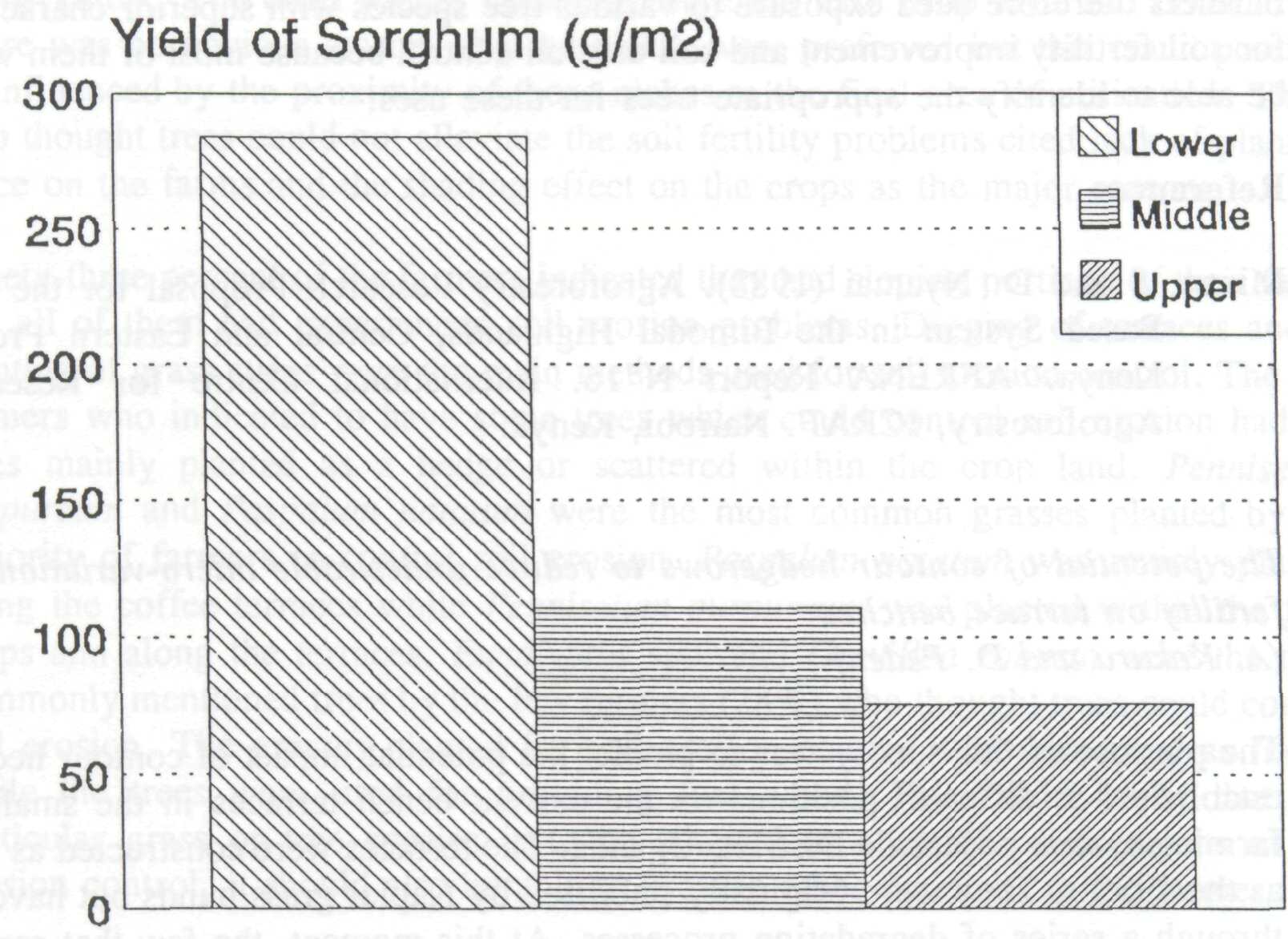
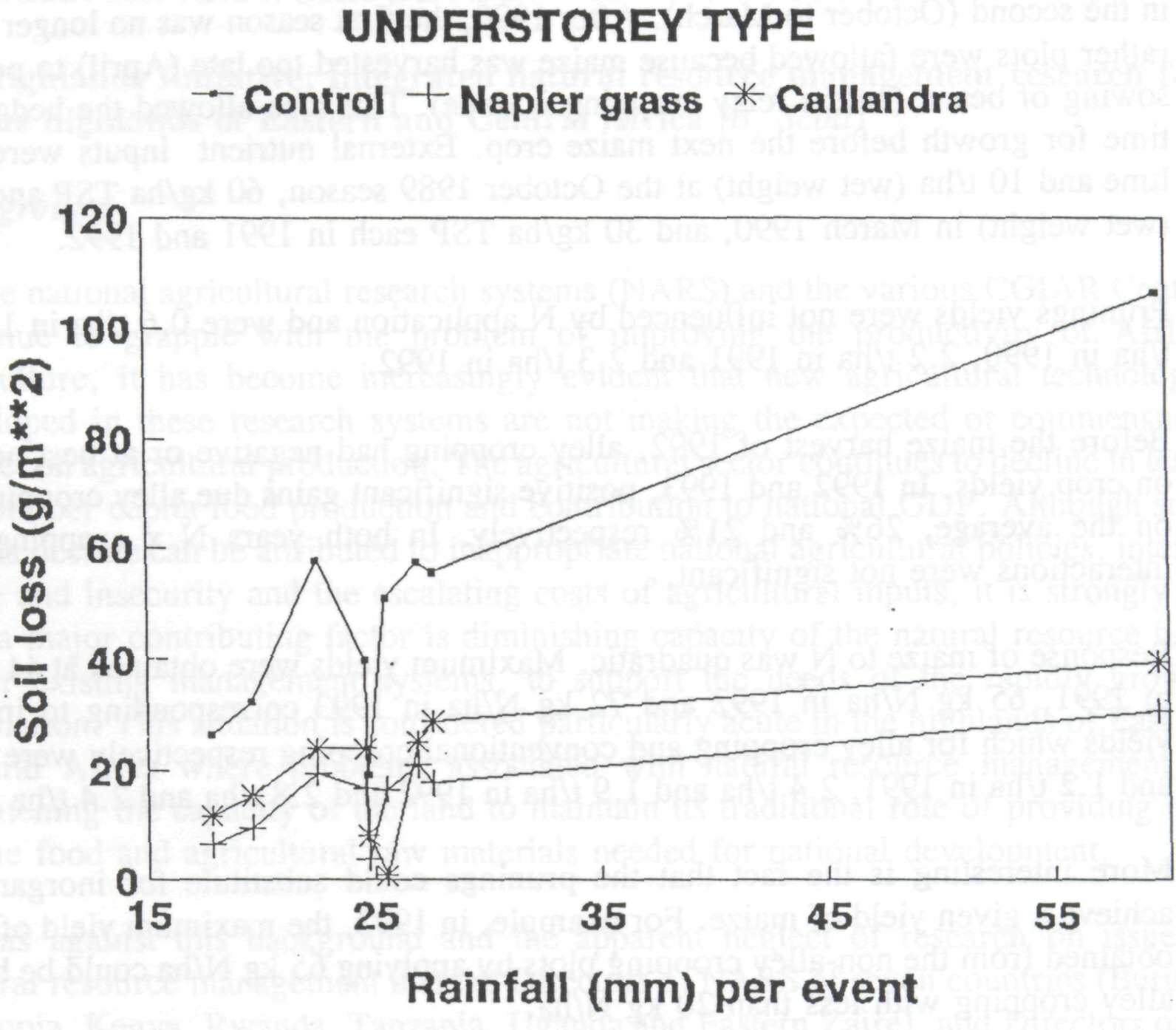
micro-variation in soil fertility on terrace benches The purpose of this survey was to predict the potential impact of contour hedgerows established at different positions on the current bench terraces in the small holder farming system of Kabale District, Uganda. The terraces were constructed as far back as the 1930's. They were originally stabilised by Napier grass bunds but have passed through a series of degradation processes. At this moment, the few that remain are not stabilised at all and appear to be inadequate. Three transects were run up-slope on three ridges which appeared to representative of the hill slopes around Kabale. Along each transect, three sorghum fields were randomly chosen excluding those where the farmer had pulled top soil down from the riser of neighbouring field above his own. Each sorghum field was stratified into the lower, middle and upper strata and aim2 sorghum sample plot demarcated in each stratum. Sorghum in each of the 1 m2 sample plots was harvested separately and oven dried to constant weight. Results from this survey indicated that about 60% of the sorghum yield is obtained from the lower most third of any given field. Only 24% is obtained from the middle third and only 16% from the top most third of the field (figure 9). This is because the most fertile top soil has accumulated on the top of the riser by the agents of soil erosion and by probably by the current cultivation practice of digging up-slope rather than along the contour. Calliandra hedges and Napier grass strips have a high potential for soil erosion control (figure 10). They do this by acting as barriers to run-off hence causing progressive terrace development on the upper side. Establishing hedgerows on top of terrace risers may not be preferred as this takes the most productive part of the bench out of crop production. Furthermore, the bench terraces are more gentle at the bottom and a barrier hedge established at this point may not contribute much in interception of run-off and soil. The most appropriate position for hedgerow establishment appears to be in the middle of the benches. The optimal inter-hedgerow spacing is not yet known. This is the most steep part of the bench and it is probably where run-off has highest velocity and highest erodibility. Therefore a barrier hedge at this point is likely to be more effective in soil erosion control and increasing infiltration of run-off than at any other point. If top soil movement is intercepted in this particular portion of the bench it will definitely result in soil fertility build up in the currently exposed barren sub-soil in the upper portion of the bench. If this is true, then hedgerow establishment in the middle of the existing terrace structures will tend towards more uniform soil fertility distribution on the benches. If uniform production similar to that observed on the lower part of the bench terraces and can be achieved with hedgerows and other technologies, current crop production in this highland farming system could be increased as much as 80%.
The effect of N-fertilizer on crop yields in alley cropping
arrangement in the highlands of Burundi The objective of the experiment was to study the effect of prunings alone or in combination with different levels of N fertilizer on crop yield in alley cropping. These trials were conducted in Mashitsi, Burundi. Treatments were full factorial combinations of 4 fertilizer levels - 0, 30,60, and 90 kg N/ha and two cropping systems - alley cropping with Leucaena diversifolia hedgerows and conventional cropping (without hedgerows), thus a total of eight treatments. Treatments were arranged in randomised complete blocks and replicated three times. A plot consisted of two 5 m-long hedges four meters apart. Hedges were established at the end of November 1988 and were cut back for the first time in October, 1989. Subsequent cut backs were in February, October and December in 1990, October and December in 1991 and December 1992 and January, 1993. The cropping sequence was maize during the first season (March to June) and maize in the second (October to March). After 1990, the first season was no longer cropped rather plots were fallowed because maize was harvested too late (April) to permit the sowing of beans (unless relay cropping is done). This also allowed the hedges more time for growth before the next maize crop. External nutrient inputs were 2 t/ha lime and 10 t/ha (wet weight) at the October 1989 season, 60 kg/ha TSP and 10 t/ha (wet weight) in March 1990, and 30 kg/ha TSP each in 1991 and 1992. Prunings yields were not influenced by N application and were 0.6 t/ha in 1989, 3.6 t/ha in 1990, 2.2 t/ha in 1991 and 2.3 t/ha in 1992. Before the maize harvest of 1992, alley cropping had negative or at best no impact on crop yields. In 1992 and 1993, positive significant gains due alley cropping were, on the average, 26% and 21% respectively. In both years N x cropping system interactions were not significant. Response of maize to N was quadratic. Maximum yields were obtained at 44 kg N/ha in 1991, 65 kg N/ha in 1992 and 72 kg N/ha in 1993 corresponding to increasing yields which for alley cropping and conventional cropping respectively were 1.1 t/ha and 1.2 t/ha in 1991, 2.4 t/ha and 1.9 t/ha in 1992 and 2.8 t/ha and 2.4 t/ha in 1993. More interesting is the fact that the prunings could substitute for inorganic N to achieve a given yield of maize. For example, in 1992, the maximum yield of 1.9 t/ha obtained from the non-alley cropping plots by applying 65 kg N/ha could be had from alley cropping with less than 20 kg N/ha.
Footnote__________ 2 The demand for Calliandra calothyrsus for fodder is only high from farmers with improved breeds of cows as local cows usually prefer not to eat them; most of our hedgerow-intercropping trial farmers have local cows. 3 Yellowing of Leucaena leucocephala leaves and purple coloration of Calliandra calothyrsus leaves |