An e-publication by the World Agroforestry Centre
METEOROLOGY AND AGROFORESTRY

|
|
An e-publication by the World Agroforestry Centre |
|
METEOROLOGY AND AGROFORESTRY |
|
|
section 5 : results of agroforestry experiments Soil erosion as influenced by rainfall erosivity under different agroforestry systems R. Gopinathan and C. Sreedharan
Department of Agronomy, College of Horticulture Abstract An experiment on 'Agrotechniques for soil conservation in taungya systems' was conducted at the Instructional Farm, College of Horticulture, Vellanikkara for a period of two years from May 1984 to April 1986. The main objectives of the experiment were to assess the runoff, soil and nutrient losses as influenced by the important taungya practices and to evolve economically and ecologically viable agroforestry measures for soil conservation. Eucalyptus, the main tree component, was intercropped with the usually-cultivated taungya crops of cassava and rice. The efficiency of cassava planting on ridges, grass farming and grass stripping was also investigated. There were seven treatments replicated thrice in randomized block design. Daily runoff and soil loss were quantified by installing multi-slot devices consisting of 47 slots and brick masonry settling tanks specifically designed for the project. Various rainfall characteristics were related vis-a-vis runoff and soil loss. It was found that runoff was highly correlated with the amount of rainfall (r = 0.930**) closely followed by kinetic energy (r = 0.912**) and AIm(r = 0.848**). Soil loss showed maximum correlation with EI 15 (r = 0.977**). A comparatively lesser correlation of runoff with soil loss (r = 0.790**) indicated that erosion was more influenced by rainfall characteristics than runoff. Cultivated fallow plot produced the highest runoff of 1259 mm (53 per cent of the total rain) and soil loss of 352 t/ha/yr. Mound planting was very much deleterious irrespective of the cassava population. Rice taungya was comparatively harmless. Grass farming was more efficient than ridging in controlling soil erosion and runoff. It accepted more than 96 per cent of the rain and eroded only 0.40 t/ha of soil in the second year. Replacing 10 percent of the cassava population with grass strips reduced soil erosion by 41 per cent as compared with the maximum cassava treated plot within one year. Tree planting alone could reduce the soil erosion by 87 per cent in the second year. The eroded soil was, in general, more clayey and contained more nutrients than the soil matrix especially during the initial months. Cultivated fallow plot had lost 416, 116, 680, 242, 878 and 229 kg/ha of N, P, K, Ca, Mg and S respectively. Such losses were 395, 120, 697, 183, 717 and 213 respectively in eucalyptus + five cassava on mounds. Grass farming, irrespective of high fertilizer application, effectively reduced the above nutrient losses respectively to 4.0, 0.40, 4.0, 2.0, 0.70 and 0.10 kg/ha. Ridge planting of cassava was also comparable to grass farming in controlling nutrient drain. Mound planting of cassava cultivation affected the soil physical characteristic while grass, rice and zero cultivation improved them. Appreciable chemical changes were not manifested between treatments during the investigation period. The most robust trees were observed in the eucalyptus-alone treatment. The weakest trees were seen with eucalyptus + five cassava on mounds. The highest net income of Rs. 10,120/ha produced by eucalyptus + grass combined with the complete control of soil erosion in the second year make this treatment the most ideal. However, the absence of a subsidiary food crop limits its adoption on a wide scale. When acceptability, profitability and sustainability are taken into account, the treatment eucalyptus + cassava + 10 per cent grass strips seems to be a better system.
Soil erosion is universally recognized as a serious threat to man's well being. An alarming majority of farmers especially in the tropical developing world suffer from devastating effect of soil erosion and consequent low crop productivity. Current conservation techniques of contour embankments, check dams, retaining walls and terraces are characterized by their high cost and impracticability. This inevitably prevents the hill slope farmers from adopting them to any measurable extent. Proper crop management is more effective in reducing erosion than conservation practices such as terracing and contouring. This is mainly due to dissipation of the rainfall erosivity by crop cover. Shaxson (1981) argues that vegetation is so effective that more effort should be made to integrate crop cover with other soil conservation practices. Unfortunately the research on the effect of crop cover in reducing erosion is inadequate to serve as a basis for conservation planning. Agroforestry is a sustainable system of land management suited to the fragile and brittle ecosystem of the tropics where soil erosion is a major problem. Most of the research results now available are from temperate zones; and a knowledge of the mechanism in tropical climate, soil and ecosystem is rather inadequate (Kanwar 1982). Environmental conditions and farming systems need to be taken into account when transferring technology from one country to another. Therefore, soil conservation planning must necessarily be country-specific and sometimes region-specific or even economic-sector-specific. Kerala, the southernmost state of India experiences a tropical humid climate and receives intense seasonal rainfall leading to severe soil erosion. Almost half of the cultivated area is on sloping lands not suitable for agriculture. The farmers are forced to cultivate cassava, the most important subsidiary food crop of the state on these steep slopes due to acute pressure on arable land. Cassava is, however, a highly erosion- permitting crop. But low cost of cultivation, quick returns and lesser incidences of pests and diseases make this an inevitable component of subsistence farming. It is important, therefore, to develop conservation techniques that incorporate the protective ability of tree crowns and crop canopies against rainfall erosivity. This paper gives the details of a two-year field experiment on runoff and soil loss as influenced by eucalyptus-based agroforestry on a steep sloping farm in Kerala.
The experiment was conducted at Kerala Agricultural University, Vellanikkara, Trichur, from May 1984 to April 1986. The site was situated at 10° 32' N and 70° 10' E at an altitude of 22 m asl. The soil was a deep, well drained, moderately acidic, sandy clay loam oxisol fairly rich in organic matter. The plot had a slope of 25 percent facing north. The experiment was laid out in uniform runoff plots of size 24 m x 4 m, arranged lengthwise facing north. The following seven treatments were replicated thrice in a randomized block design. T1 -Eucalyptus alone. In the second year, T7 was changed to eucalyptus + cassava on mounds as in T2 + 10 per cent of the area inter-stripped with congosignal grass. Daily runoff from each plot was collected in a runoff- collecting device comprising a brick masonry tank and a multi-slot device with 47 slots, specifically designed for the purpose. Settled and suspended sediments were measured separately and total soil loss was calculated. Splash erosion in each treatment was determined by installing splash collection assembly as suggested by Verma (1984). Rainfall interception was assessed by measuring the throughfall under the canopy cover with ordinary rain gauges. Canopy cover index was calculated from the canopy cover of each crop and each treatment. An automatic recording rain-gauge installed at the experimental site provided details on specific rainfall events. Various characteristics of the rainfall, viz., amount, duration, intensity, kinetic energy, EI15(total k.e. x maximum rainfall intensity in 15 minutes / 100), EI30) ( total k.e. x maximum rainfall intensity in 30 minutes / 100), and AIm (amount x intensity maximum factor) were determined (Wischmeier 1975; Hudson 1984).
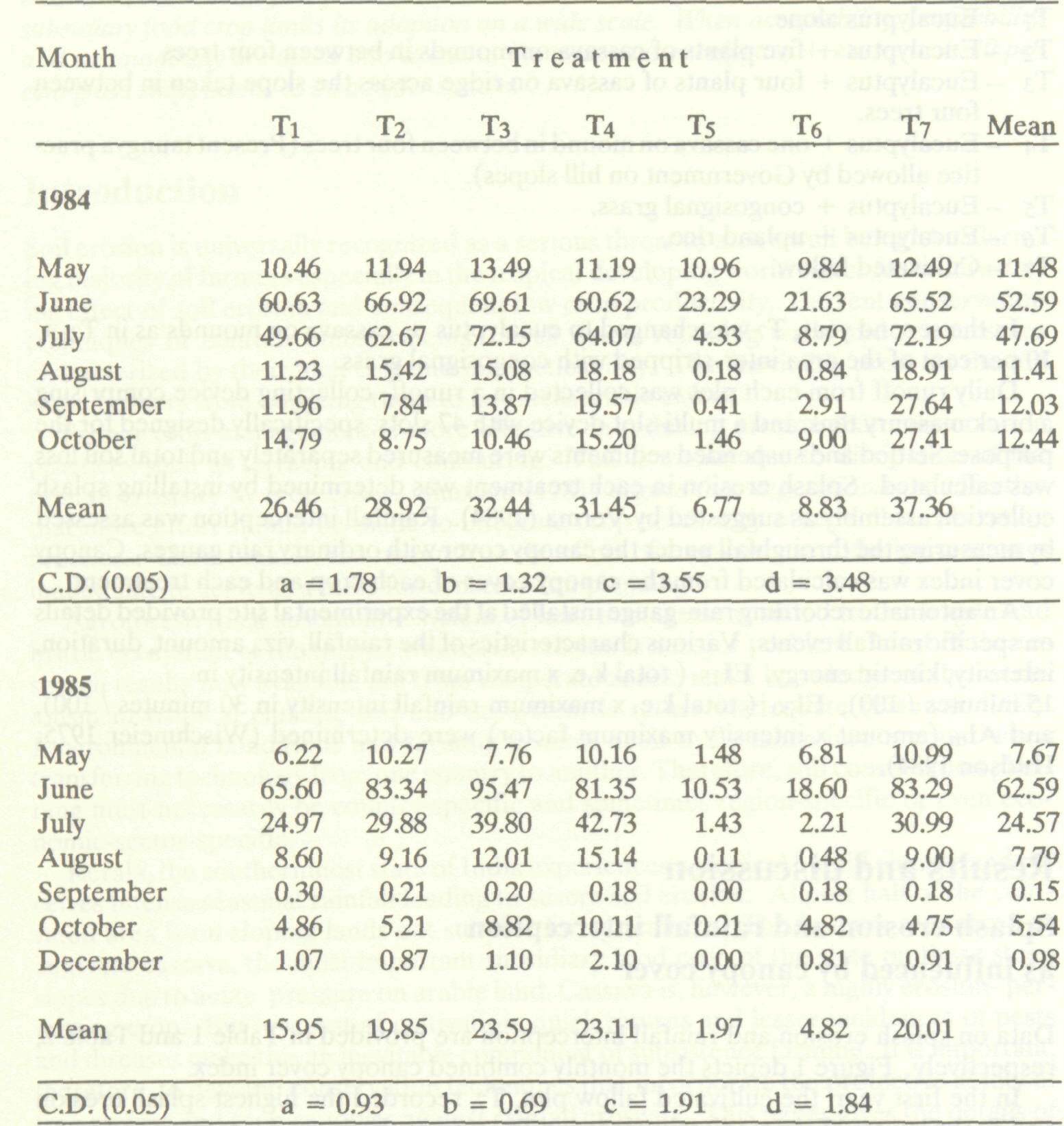
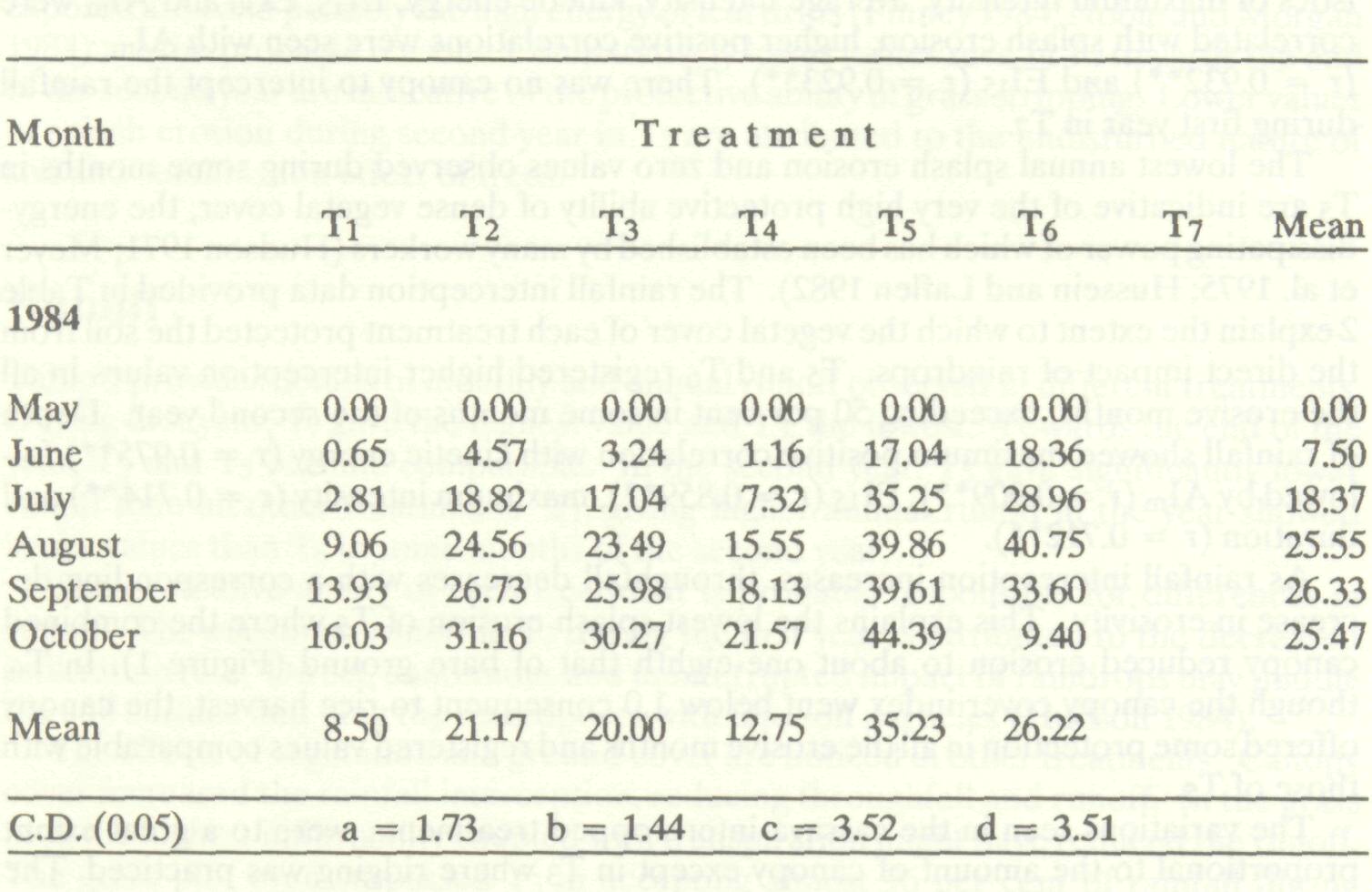
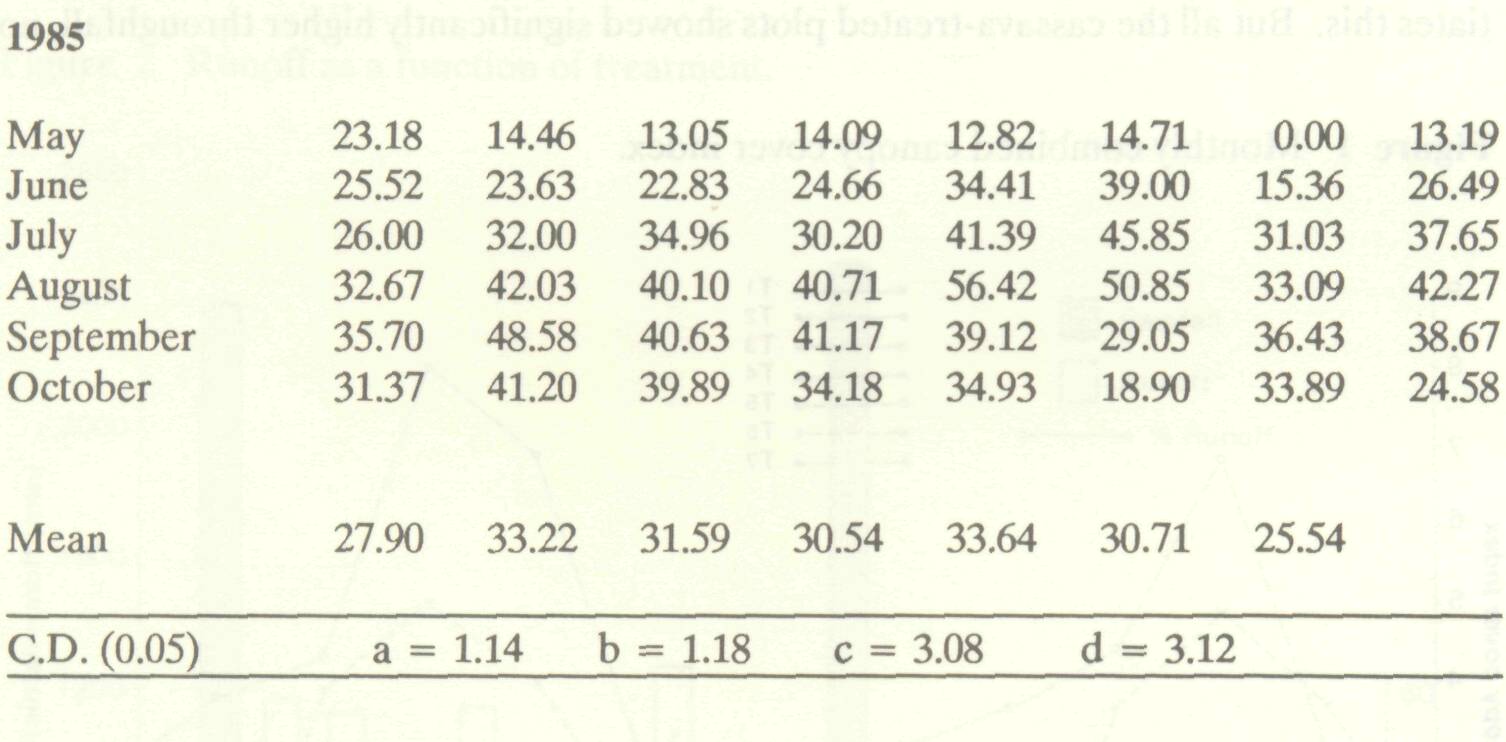
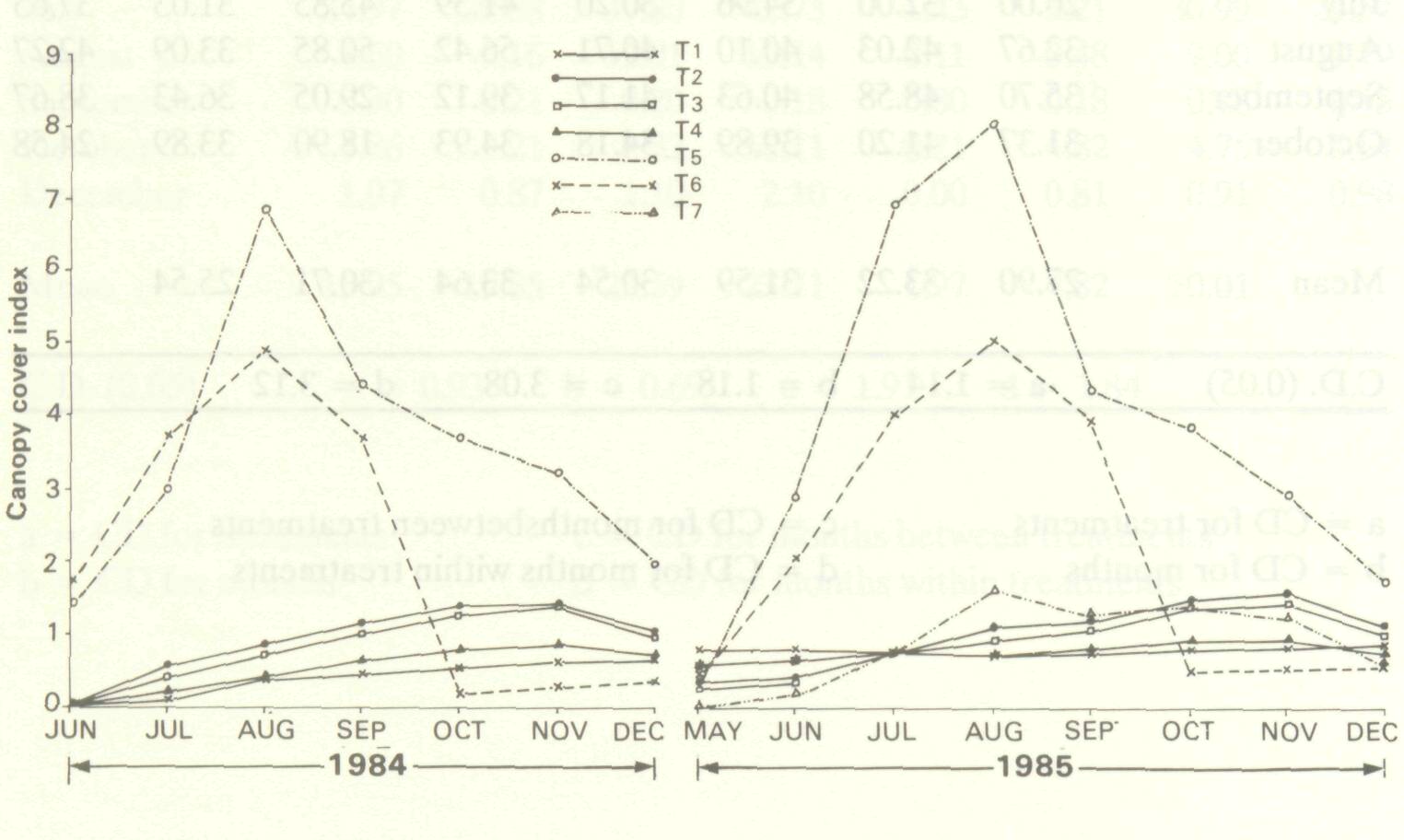
Splash erosion and rainfall interception as influenced by canopy cover Data on splash erosion and rainfall interception are provided in Table 1 and Table 2, respectively. Figure 1 depicts the monthly combined canopy cover index. In the first year, the cultivated fallow plot, T7, recorded the highest splash erosion and T5 the lowest. T6 immediately preceded T5. Among the cassava intercropped treatments, T3 gave the maximum value followed by T4and T2. T1 recorded lower value than the cassava intercropped treatments. The second year showed almost the same trend. T7 registered a lesser value than T3 and T4. In grass plotT5, annual splash erosion was significantly less and even registered zero values in some months. Table 2 reveals that, in the first year, grass and rice plots recorded maximum interception. T1 registered the lowest interception. Other treatments gave intermediate values. The same trend was followed in the second year. Splash erosion is a measure of the detachability of soil particles by the impact of rain drops. The highest splash erosion observed in T7 of the first year is due to the impact of the un-interrupted rain on the cultivated bare fallow plot. Soil detachment due to impact of rain is mainly determined by the energy with which individual raindrop hits the soil surface (Mutchler and Young 1975; Hudson 1984). When the rainfall characteristics of maximum intensity, average intensity, kinetic energy, EI15, EIso and AIm were correlated with splash erosion, higher positive correlations were seen with AIm (r = 0.932**) and EIis (r = 0.923**). There was no canopy to intercept the rainfall during first year in T7 Table 1 Splash erosion (g/m )
Table 2 Rainfall interception (%)
As rainfall interception increases, throughfall decreases with a corresponding decrease in erosivity. This explains the lowest splash erosion of T5 where the combined canopy reduced erosion to about one-eighth that of bare ground (Figure 1). In T5 , though the canopy cover index went below 1.0 consequent to rice harvest, the canopy offered some protection in all the erosive months and registered values comparable with those of T5 . The variations seen in the cassava-intercropped treatments, were to a great extent proportional to the amount of canopy except in T5 where ridging was practiced. The reduced rate of splash erosion seen in T2 as compared to T5 towards the end, substantiates this. But all the cassava-treated plots showed significantly higher throughfall, no matter whether the population of cassava was minimum as in T5 or maximum as in T2. The initial slow growth of cassava, severe soil disturbance due to mound planting, large exposed area and possibly the high energy of leaf drips (Finney 1984; Noble and Morgan 1984) are the probable reasons. Comparatively lower values seen in T7 towards the end of the second year are indicative of the protective ability of grass stripping. Lower values of splash erosion during second year in T1 are attributed to the undisturbed nature of soil and stabilization effect of trees.
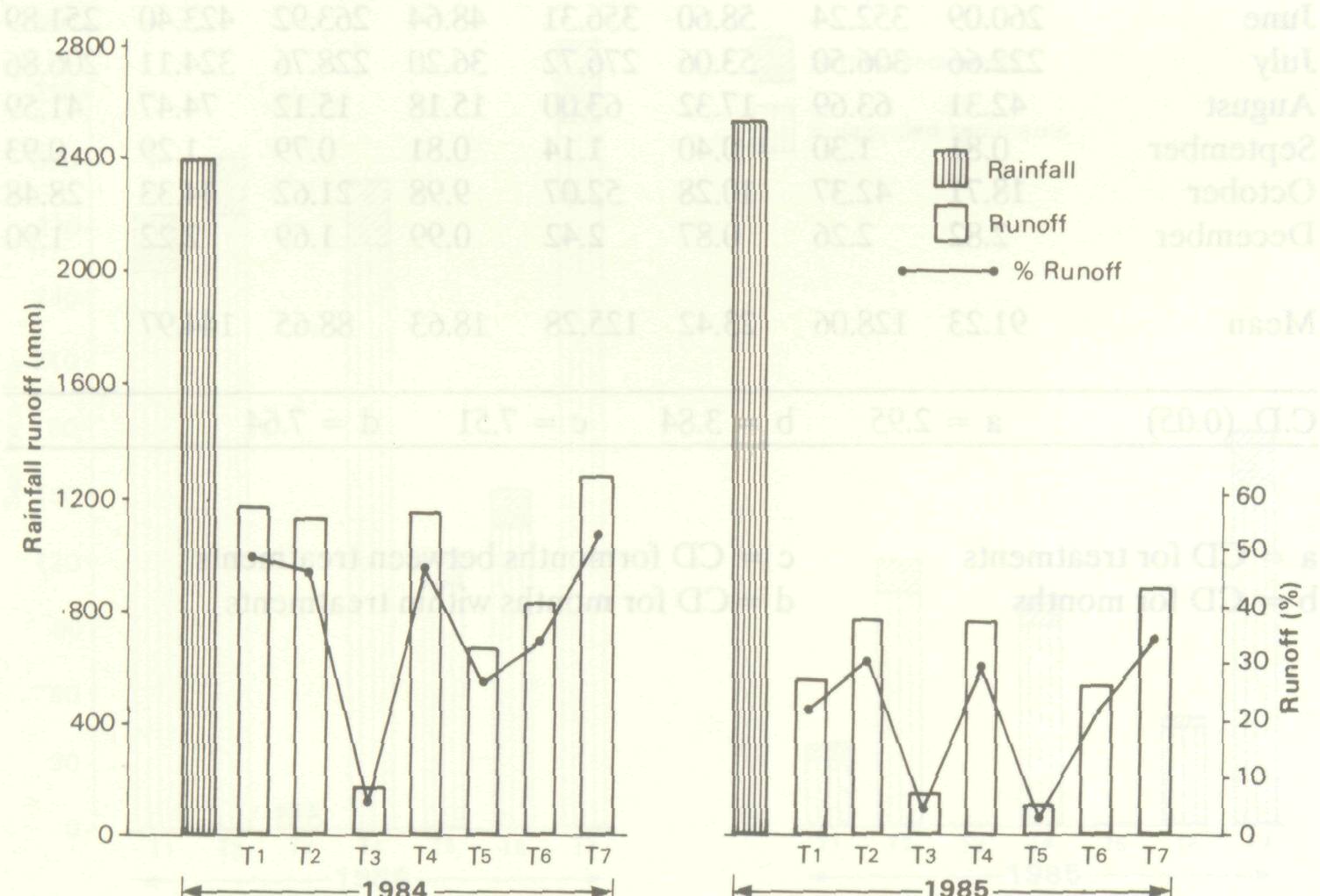
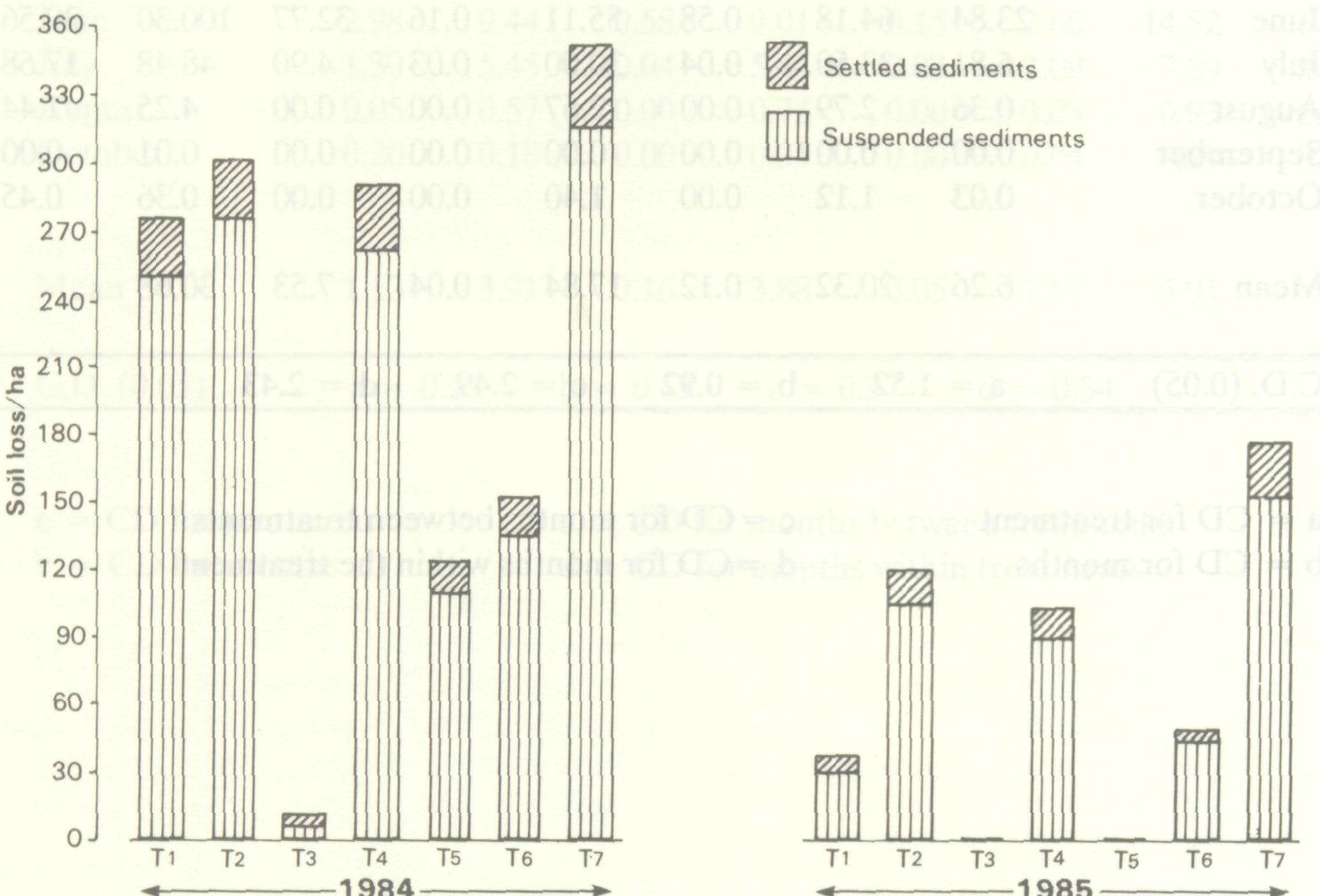
Table 3 provides details of monthly and annual runoff observed in different treatments. During first year, T7 gave the highest value and T3, the lowest. Towards the end of the year, T3 and T5 became comparable. In the second year, T5 gave significantly lower runoff than all other treatments. T1 giving higher annual runoff in the year showed lesser values than T6 in some months of the second year. The protective ability of each treatment is probably responsible for differences in runoff. The maximum runoff in T7 during the first year is attributed to the decreased infiltration rate. Direct, continuous and uninterrupted impact of raindrops may puddle the soil surface and plug the macropores with fine soil particles (Hudson 1984). The effects of vegetation and ground cover are noticed in other treatments. Canopy cover increased the rainfall interception, reducing throughfall and runoff. In the grass plot, the highest infiltrability coupled with transpiration might have reduced the runoff. The grass plot even surpassed T3 in accepting almost 96 per cent of rainfall during second year (Figure 2). The benefit of grass was manifested clearly even when 10 per cent of the area was grass stripped. This suggests that grass once established is more effective in reducing runoff than ridging.
Table 3 Monthly runoff (mm)
Rice also controlled runoff to a significant extent and in effect behaved similar to grass. The mound method of cassava cultivation seems to accelerate soil runoff. Even though increased rainfall interception was noticed in T2 there was no appreciable difference in runoff between the cassava-cropped plots. The stabilization effect of the treatments consequent to tree cropping is worth noting. Even though there was more rainfall in the second year, all treatments recorded comparatively lesser runoff. This was more evident in T1which maintained robust trees. Undisturbed soil consequent to zero cultivation might have aided in reducing runoff.
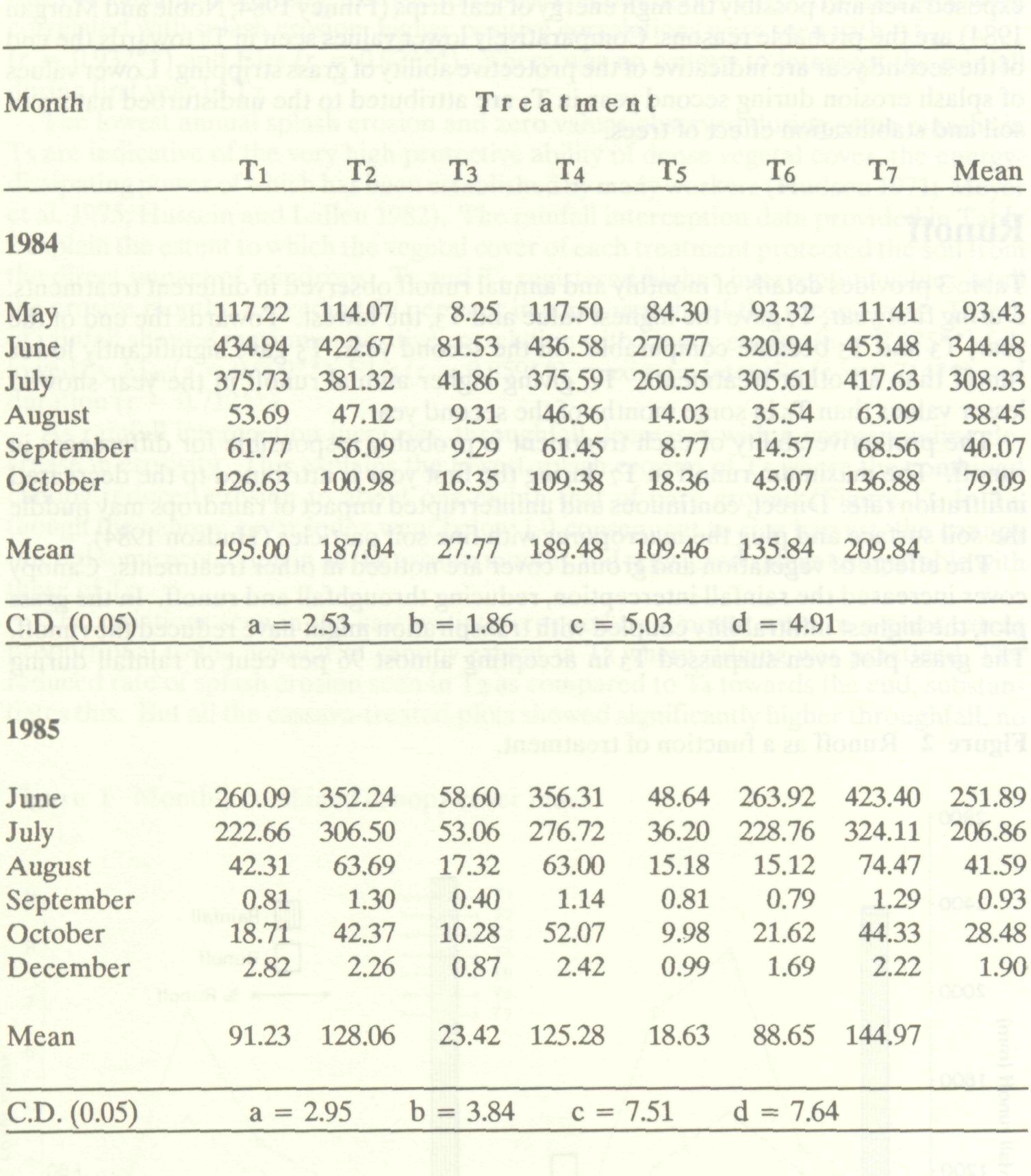
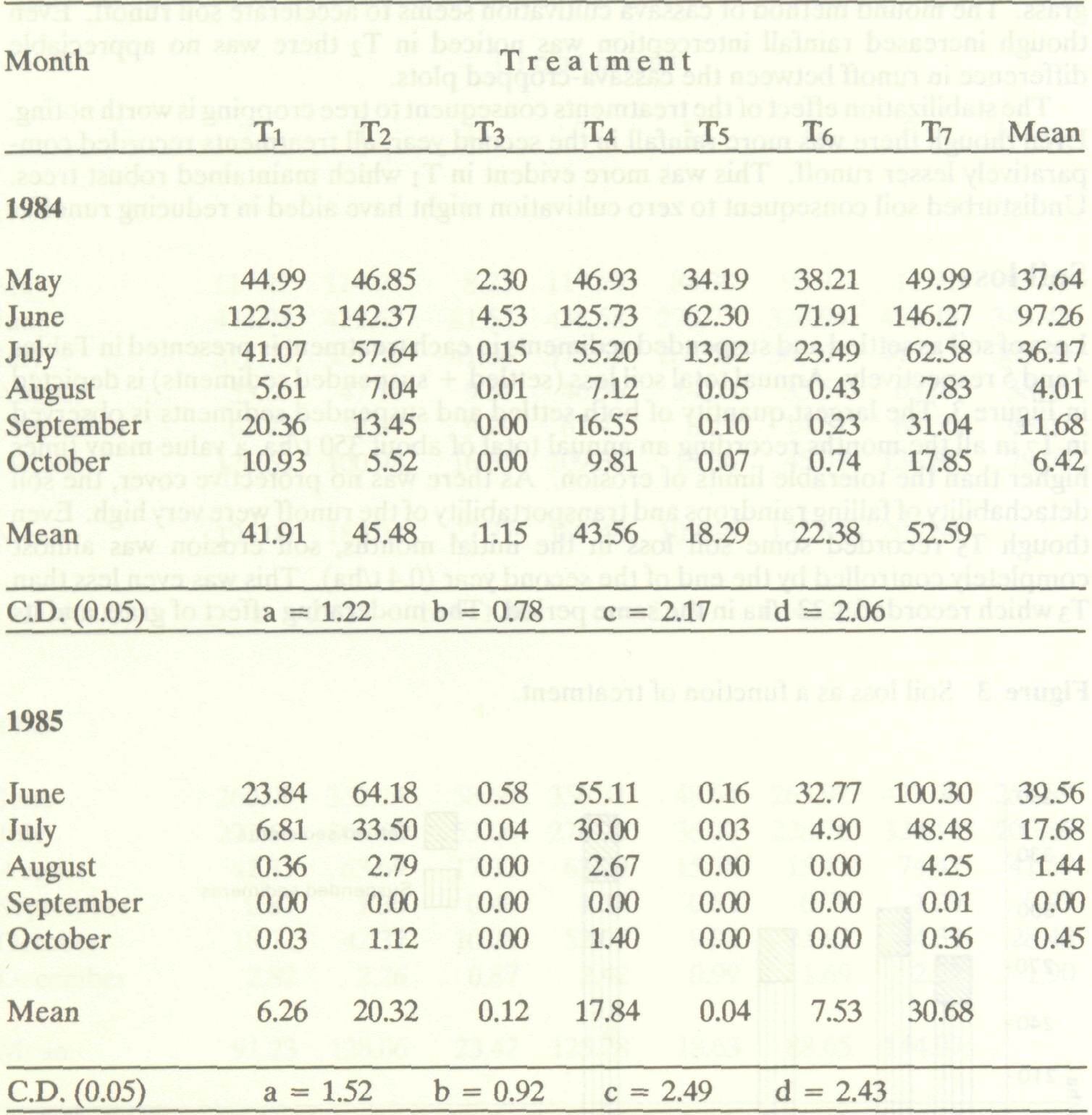
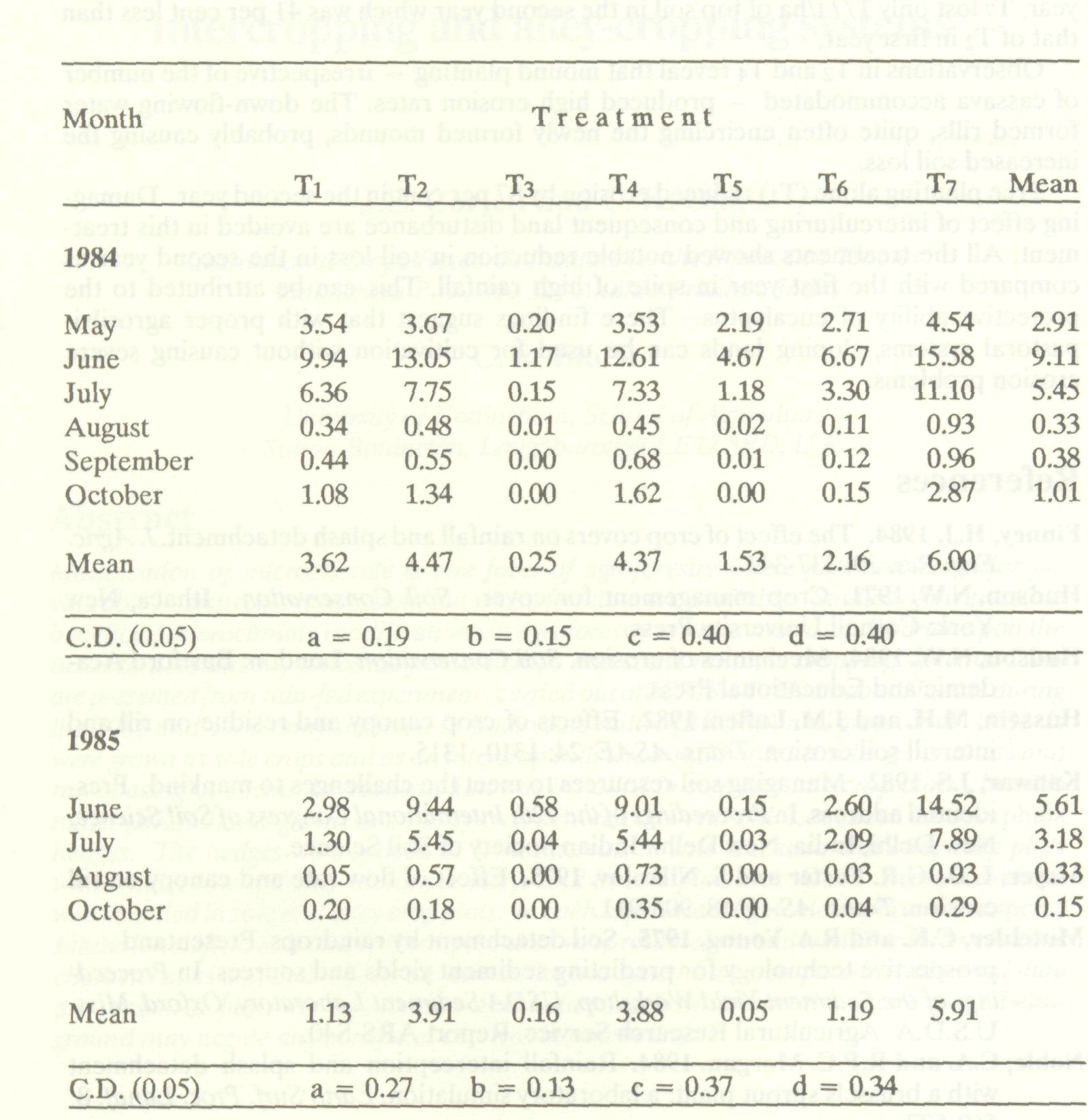
Loss of soil as settled and suspended sediments in each treatment is presented in Tables 4 and 5 respectively. Annual total soil loss (settled + suspended sediments) is depicted in Figure 3. The largest quantity of both settled and suspended sediments is observed in T7 in all the months recording an annual total of about 350 t/ha, a value many times higher than the tolerable limits of erosion. As there was no protective cover, the soil detachability of falling raindrops and transportability of the runoff were very high. Even though T5 recorded some soil loss in the initial months, soil erosion was almost completely controlled by the end of the second year (0.4 t/ha). This was even less than T3 which recorded 1.22 t/ha in the same period. The moderating effect of grass and its fibrous root system are probable contributing factors. The protective ability of grass was apparent even when 10 per cent of the area was stripped of grass in T7 in the second year. T7 lost only 177 t/ha of top soil in the second year which was 41 per cent less than that of T2 in first year.
Table 4 Monthly settled sediment loss (t/ha)
Table 5 Monthly suspended sediment loss (t/ha)
Tree planting alone (T1) reduced erosion by 87 per cent in the second year. Damaging effect of interculturing and consequent land disturbance are avoided in this treatment. All the treatments showed notable reduction in soil loss in the second year as compared with the first year in spite of high rainfall. This can be attributed to the protective ability of eucalyptus. These findings suggest that with proper agrosilvi-pastoral systems, sloping lands can be used for cultivation without causing severe erosion problems.
Finney, H J. 1984. The effect of crop covers on rainfall and splash detachment J. Agric. Eng. Res. 29: 337-343. Hudson, N.W. 1971. Crop management for cover. Soil Conservation. Ithaca, New York: Cornell University Press. Hudson, N.W. 1984. Mechanics of erosion. Soil Conservation. London: Bastford Academic and Educational Press. Hussein, M.H. and J.M. Laflen. 1982. Effects of crop canopy and residue on rill and interrill soil erosion. Trans. ASAE 24:1310-1315. Kanwar, J.S. 1982. Managing soil resources to meet the challenges to mankind. Presidential address. In Proceedings of the 12th International Congress of Soil Science, New Delhi, India. New Delhi: Indian Society of Soil Science. Meyer, L.D., G.R. Foster and S. Nilkolov. 1975. Effect of flow rate and canopy on rill erosion. Trans. ASAE 18:905-911. Mutchler, C.K. and RA. Young. 1975. Soil detachment by raindrops. Present and prospective technology for predicting sediment yields and sources. In Proceedings of the Sediment Yield Workshop, USDA Sediment Laboratory, Oxford, Miss. U.S.D.A. Agricultural Research Service. Report ARS-S40. Noble, CA. and R.P.C. Morgan. 1984. Rainfall interception and splash detachment with a brussels sprout plant: a laboratory simulation. Earth Surf. Proc. Landf. 8: 569-577. Shaxson, T.F. 1981. Reconciling social and technical needs in conservation work on village farm lands. In R.P.C. Morgan (ed.), Soil conservation: problems and prospects. Chichester, England: Wiley. Verma, B. 1984. Determination of erosion and parameters of soil loss equation with runoff plots. Extension Bulletin, C.S.&W.C.R.&T.D. Research Centre, Kota India. Wischmeier, W.H. 1975. Estimating the soil loss equations, cover and management factor for undisturbed areas: present and prospective technology for predicting sediment yields and sources. In Proceedings of the Sediment Yield Workshop, USDA Sediment Laboratory, Oxford, Miss. U.S.D.A. Agricultural Research Service. Reprt ARS-S40. Wischmeier, W.H. and D.D. Smith. 1978. Predicting rainfall erosion loss. U.S.D.A. Agricultural Handbook pp. 537. |