An e-publication by the World Agroforestry Centre
AGROFORESTRY IN THE HIGHLANDS OF EASTERN AND CENTRAL AFRICA


|
|
An e-publication by the World Agroforestry Centre |
|
AGROFORESTRY IN THE HIGHLANDS OF EASTERN AND CENTRAL AFRICA
|
|
|
4. SUMMARIES OF TECHNICAL PRESENTATIONS 4.1 MPT selection, management and improvement technologies Economic evaluation of agroforestry nurseries by groups in
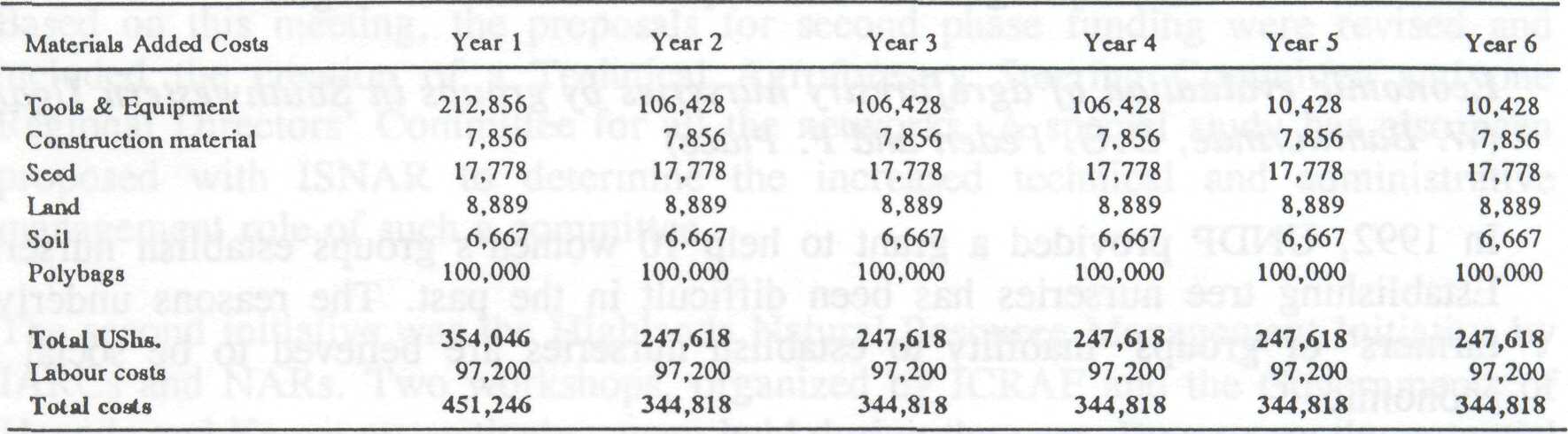
Southwestern Uganda In 1992, UNDP provided a grant to help 10 women's groups establish nurseries. Establishing tree nurseries has been difficult in the past. The reasons underlying farmers' or groups' inability to establish nurseries are believed to be social and economic. Multipurpose trees raised in the nursery are used to establish hedgerows and upperstorey trees which would help in improving soil fertility and reduce soil erosion. They are a source of fodder, firewood, and green manure for most households. However, farmers want positive economic returns. They compare the costs and time spent on nurseries with the benefits either in terms of seedlings planted on farm or cash generated from the sale of seedlings. Results indicate that putting soil in pots and pricking out took about 48 % of the total man days spent on the nursery operations (table 1). A total average of 6,847 seedlings per group was produced for a period of one year. During the first year, expenditure on tools and equipments was about 62% of the total expenditure. In the recurrent expenditure, polythene bags range from 14% to 26% of the total expenditure.
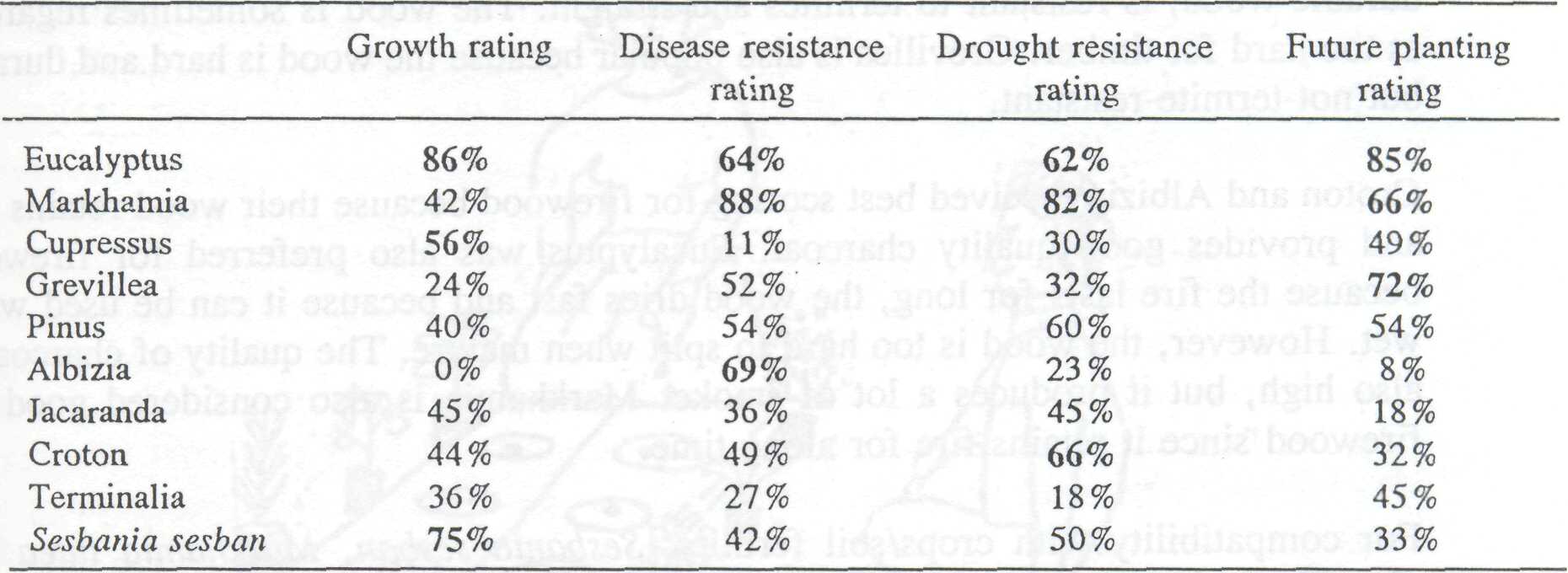
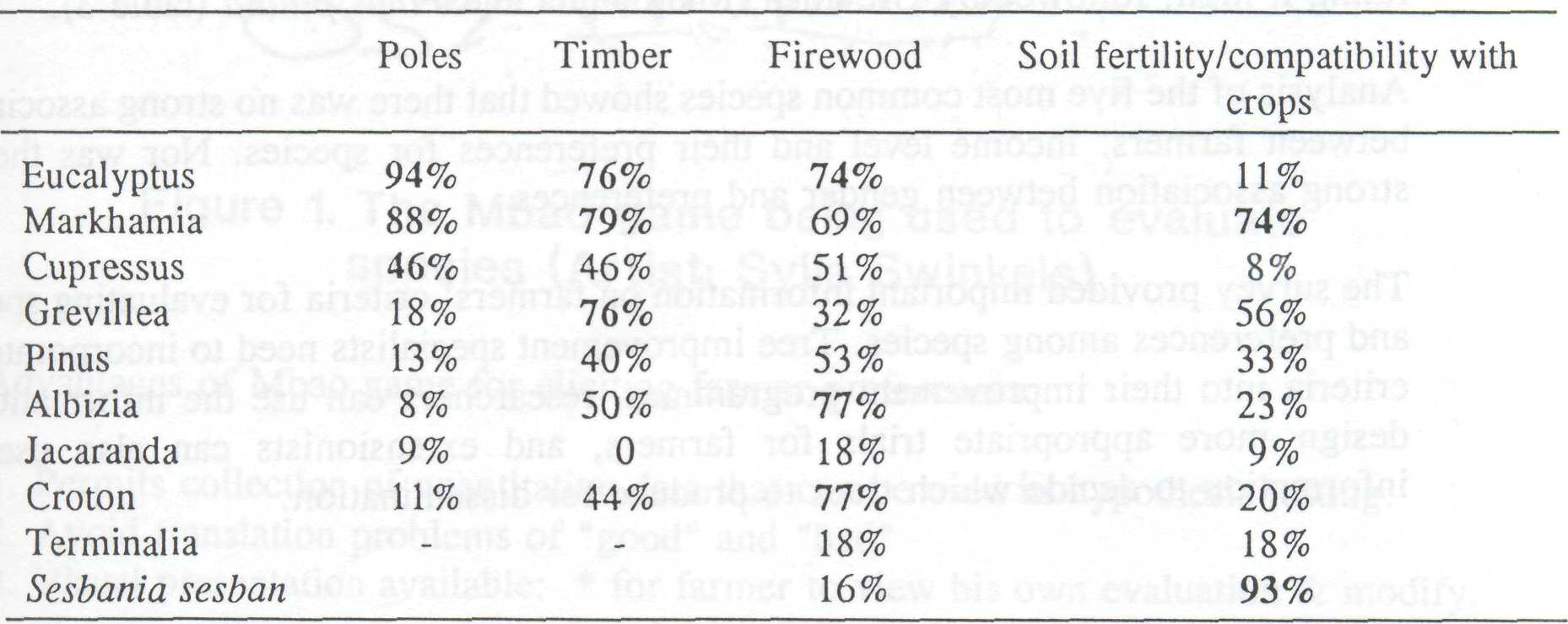
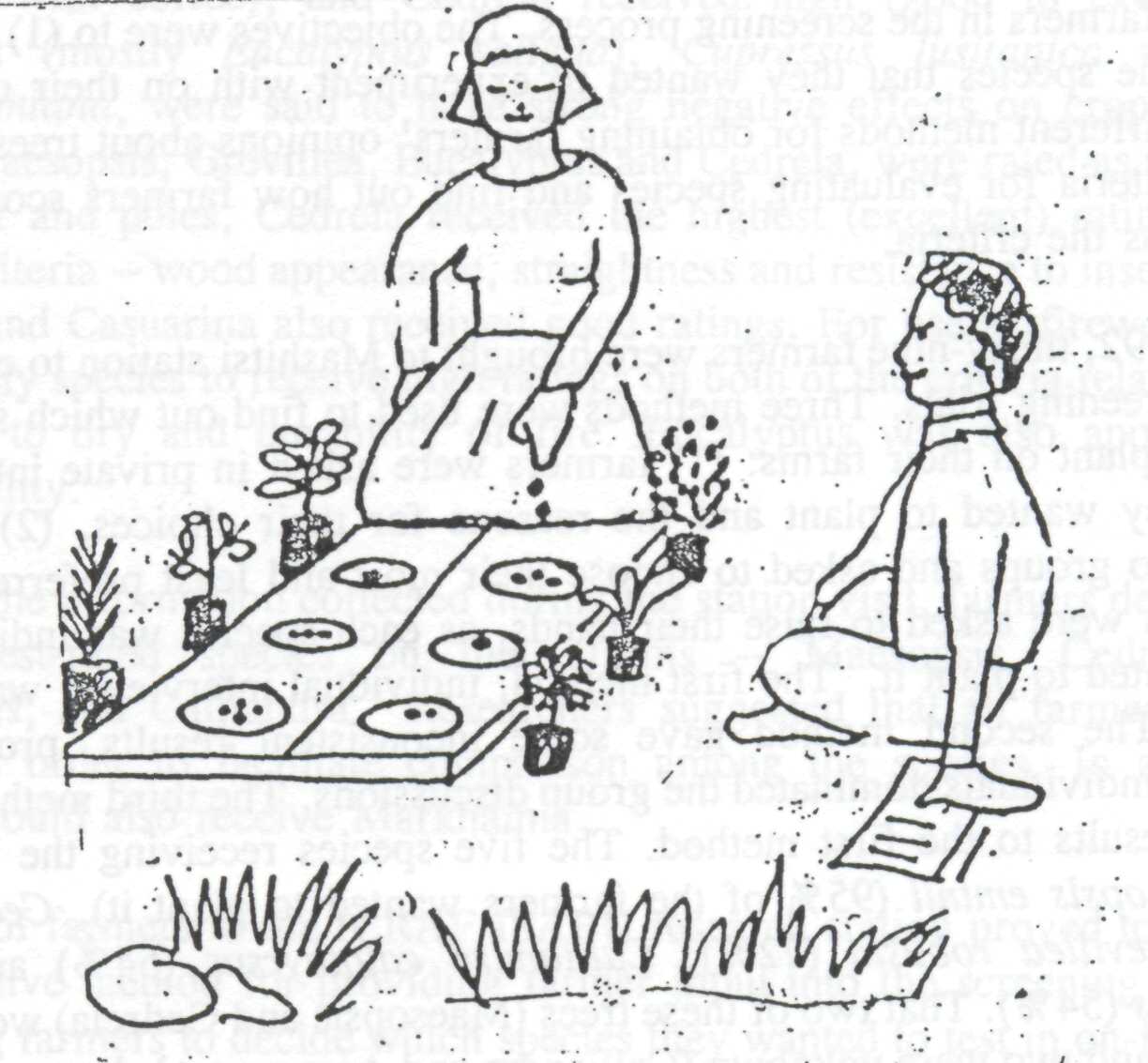
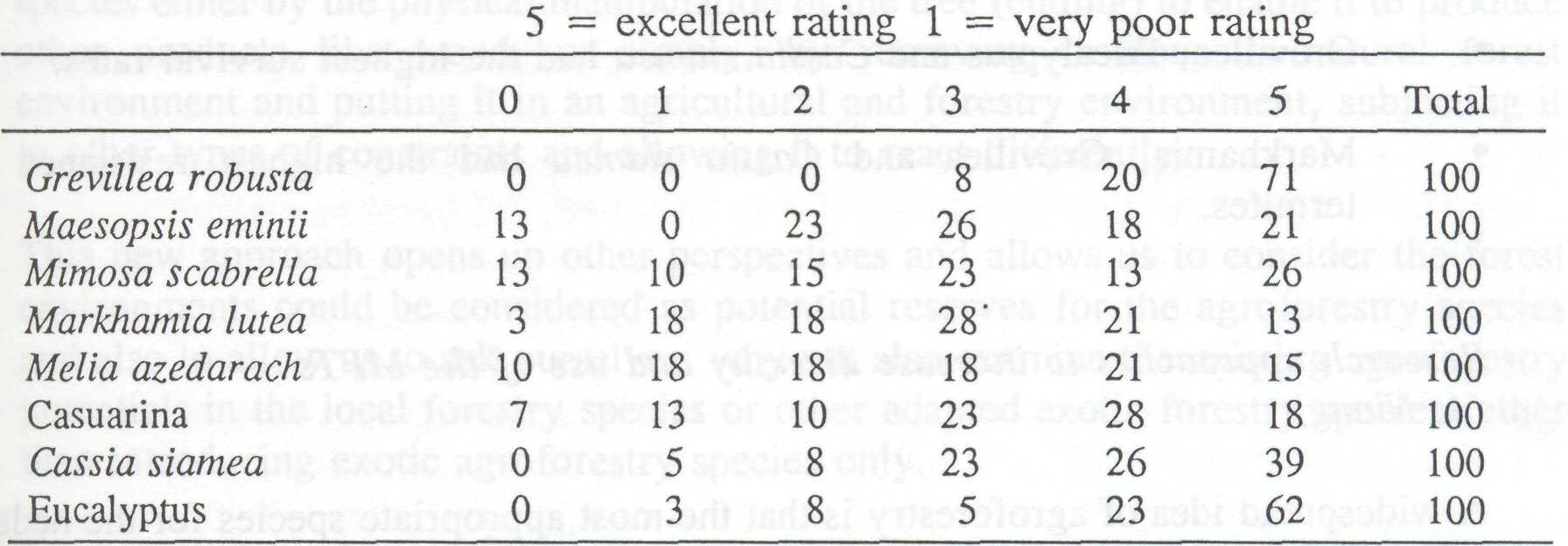
An understanding of farmers' assessment of tree species is a critical input to the design of agroforestry research. Yet little has been reported on farmers' assessment of trees, that is, the evaluation criteria they use and how they rate trees on the different criteria. Moreover, what data are available are rarely quantitative. The objectives of this report are: (1) to elicit farmer evaluation criteria and obtain farmers' ratings of trees for wood products they know across important criteria, and (2) to test the "Mbao" game, a traditional board game common throughout Africa, for eliciting farmers' evaluations. Data are collected from the food-crop based land use system of western Kenya, which includes highland areas of Vihiga, Kisumu, and Siaya districts. In the first stage of the research, an informal survey was conducted to identify the criteria farmers use in evaluating trees and how best to use the Mbao game. Next, a formal survey was conducted of 60 farm households, forty of whom were from the Luo ethnic group and twenty Luhyas. Farmers were selected at random, using informal selection measures, such as deciding to interview the fourth household on the right down a rural path. The visit to each farm began with a tour of the farm, during which the farmer mentioned the most important trees on his or her farm and informally discussed their principal characteristics, advantages, and disadvantages. Next, farmers used the game (figure 1) to elicit farmers' ratings of species across criteria they felt were important. Farmers rated each species from 1 seed (poor) to 5 seeds (excellent) for each criteria. Data were not collected concerning fruit trees. Of the households visited, 28% were female-headed. When asked to name their six most important tree species, farmers mentioned a total of 36 different species. The three most frequently mentioned species, cited by over 60% of the farmers, were: Eucalyptus spp., Markhamia lutea and Cupressus lusitanica. Others included Grevillea robusta, Pinus patula, Albizia coriara, Sesbania sesban, Jacaranda mimosifolia, Terminalia mentalis and Croton macrostachyus. Farmers' most important criteria included growth characteristics (speed of growth, pest and drought resistance) and end uses (poles, timber, firewood and soil fertility/ compatibility with crops), as shown in tables 3 and 4.
Farmers claim Eucalyptus and Sesbania grow faster than other species, but Albizia coriaria was considered to be the slowest. Cypress and Sesbania are frequently attacked by diseases and insects and are, therefore, rated low. Markhamia and Croton were rated high for drought resistance because the tree leaves remain green. Eucalyptus is also resistant since it is able to coppice during the dry season while others are affected by drought. Eucalyptus and Markhamia received the best ratings for poles. They are preferred because their wood is hard, poles are straight, and wood is durable (17%). According to farmers, Grevillea wood is weaker, rots easily and is susceptible to termite attack; therefore it is not very popular for poles. For timber use, Markhamia, Grevillea and Eucalyptus were each rated high (that is, good or excellent) by over 75% of the respondents. Markhamia has a high quality timber because the wood is very hard, strong, termite-resistant and durable. The only disadvantage is that the wood is not very straight. Eucalyptus has hard, strong and durable wood, is resistant to termites and straight. The wood is sometimes regarded as too hard for timber. Grevillea is also popular because the wood is hard and durable but not termite-resistant. Croton and Albizia received best scoring for firewood because their wood retains fire and provides good quality charcoal. Eucalyptus was also preferred for firewood because the fire lasts for long, the wood dries fast and because it can be used when wet. However, the wood is too hard to split when mature. The quality of charcoal is also high, but it produces a lot of smoke. Markhamia is also considered good for firewood since it retains fire for along time. For compatibility with crops/soil fertility, Sesbania sesban, Markhamia lutea and Grevillea robusta were rated high. According to farmers, leaves of these can also be used as mulch and the roots do not compete with crops. For future planting, Eucalyptus still remains the favourite species, 85% of the farmers rating it high, followed by Grevillea, Markhamia and Pinus patula (table 3). Analysis of the five most common species showed that there was no strong association between farmers' income level and their preferences for species. Nor was there a strong association between gender and preferences. The survey provided important information on farmers' criteria for evaluating species and preferences among species. Tree improvement specialists need to incorporate the criteria into their improvement programmes, researchers can use the information to design more appropriate trials for farmers, and extensionists can also use the information to decide which trees to produce for dissemination. The study also confirmed that the Mbao game was a useful tool for eliciting farmers' assessment of species because it:
Advantages of Mbao game for eliciting farmer preferences:
But the information is preliminary; farmers evaluations will depend on how they use the trees, which will only be available after several more years. Survey provided important information for:
Mbao game is useful for providing accurate, quantitative data on farmer preferences. Farmer participation in on-station tree species selection for
agroforestry: A case study from Burundi On-station tree selection programmes seldom have any substantial input from farmers. This paper describes an exercise by the ICRAF/ISABU project near Gitega, Burundi to involve farmers in the screening process. The objectives were to (1) permit farmers to select the species that they wanted to experiment with on their own farms, (2) compare different methods for obtaining farmers' opinions about trees, and (3) elicit farmers criteria for evaluating species and find out how farmers score species they knew across the criteria. In May, 1992, thirty-nine farmers were brought to Mashitsi station to evaluate species in three screening trials. Three methods were used to find out which species farmers wanted to plant on their farms: (1) farmers were asked in private interviews which species they wanted to plant and the reasons for their choices, (2) farmers were divided into groups and asked to choose their most and least preferred species, and (3) farmers were asked to raise their hands, as each species was indicated, to show if they wanted to plant it. The first method, individual interviews, was judged to be the best. The second method gave some inconsistent results, probably because outspoken individuals dominated the group discussions. The third method gave almost identical results to the first method. The five species receiving the highest ratings were Maesopsis eminii (95% of the farmers wanted to plant it), Cedrela serrulata (92%), Grevillea robusta (72%), Calliandra calothyrsus (54%) and Acrocarpus fraxinifolius (54%). That two of these trees (Maesopsis and Cedrela) were little known to farmers and two were unknown (Calliandra and Acrocarpus) demonstrates farmers' strong interest in testing species that appeared promising to them even though they were not familiar with them. Maesopsis, Cedrela, and Grevillea were appreciated for their rapid growth, usefulness for poles and timber, and minimal competition with crops. Maesopsis was also appreciated for its use as firewood, and its leaves are used to treat headaches (quoted by women); Cedrela for its straightness and lack of nodes. Grevillea had two other advantages ~ its heavy branching provides firewood and its leaves are used as a mulch for coffee. Acrocarpus was appreciated for its rapid growth; farmers surmised that it might be good for timber. Calliandra was appreciated primarily for its use as livestock feed. Males and females appeared to have similar preferences among species — but the sample size may have been too biased with only five women out of the thirty-nine farmers -- with one important exception. Markhamia lutea was selected by women for its medicinal use in curing diarrhoea while men had little interest in this species. Farmers' criteria for selecting species were identified during visits to their farms. Seven criteria were identified as important to farmers; two concerned growth characteristics, three concerned use as timber and poles, and two concerned use as firewood. The Mbao game was used to evaluate the species across the criteria. Branches of each major species farmers knew were laid out on the ground and for each criterion, farmers rated the species by putting one to five seeds next to each — five being an excellent rating and one being a poor rating. Twenty-five persons were interviewed. Concerning compatibility with crops, Grevillea, Albizia chinensis (commonly associated with coffee), and Cedrela received high (good to excellent) ratings; Eucalyptus (mostly Eucalyptus saligna), Cupressus lusitanica and Casuarina cunninghamiana, were said to have strong negative effects on crops. On speed of growth, Maesopsis, Grevillea, Eucalyptus and Cedrela, were rated as fastest growing. For timber and poles, Cedrela received the highest (excellent) ratings on all three relevant criteria — wood appearance, straightness and resistance to insects. Maesopsis, Cypress, and Casuarina also received good ratings. For use as firewood, Eucalyptus was the only species to receive high ratings on both of the criteria related to firewood, quickness to dry and durability of fire. Eucalyptus was also appreciated for its coppiceability. Based on the information collected during the station visit, farmers decided to test the five highest-rated species on their farms — Maesopsis, Cedrela, Grevillea, Acrocarpus, and Calliandra. Researchers suggested that all farmers grow all five species in order to facilitate comparison among the species. In addition, female farmers would also receive Markhamia. The visit of farmers to the ICRAF/ISABU research station proved to be a useful and cost-effective method for providing farmer input into the screening process and for permitting farmers to decide which species they wanted to test in on-farm trials. Most of the findings confirmed what researchers already knew from their informal interaction with farmers. However, researchers learned four important lessons during the station visit. First, they were not aware that Markhamia was highly preferred by women and that it was important for preparing a local medicine. Second, they thought that Casuarina would be a preferred species and learned instead that farmers did not like it, because it competes with crops and is slow growing. Third, they learned that farmers' own Markhamia trees grew less straight than the ones they were testing on station. Researchers are investigating the reasons for this — whether it is a question of provenance/progeny, seed source, or management. Fourth, the exercise demonstrated farmers' strong interest in testing species that they have not seen before or that are little known in the area, based on their performance in an on-station trial. Impact of multipurpose tree dissemination and nursery establishment: A fanmer's perspective This paper summarizes the views expressed in interviews with the members from ten farmers' groups in Kabale District. With a felt need and encouragement from the NRM Government, women looked for agroforestry scientists because of their technical knowledge and skills to help them in tree planting on their small plots of land which were used for crops only. This started in 1991, when women's groups established tree nursery beds. On these beds, they have the following different tree species: Grevillea, Calliandra, Casuarina, Alnus, Pinus patula, Avocado, tree tomatoes, passion fruits, etc. Vegetables were also introduced to the groups. More recently, the groups came to recognize that adoption of agroforestry required support and effort of both men and women. Consequently, the groups have evolved in the past few months from being "women's groups" to "two wings" groups, encouraging participation by men as well as women. Although we have not achieved our main objectives, that is the control of soil erosion for sustainable production, we have benefited from the following:
The programme is more than agroforestry alone because it has created a forum where farmers come to share their own experiences, solve their many different problems and look for new ways and ideas of development. It is a growth process. As we grow, we hope to grow more fruits, more trees for income generation and acquire group land for group action. Given our land tenure system, the impact of multi-purpose trees is high and agroforestry seems to be the only answer to many problems. The impact of the MPTs established so far has been high, because non-members have copied the technologies and they are buying and planting seedlings to accomplish this. Some have established individual tree nursery beds and are selling seedlings for cash, many new groups are contacting the already existing groups for assistance in order to open up their own nursery beds. Grateful we are, to the ICRAF programme for its help to farmers in development, for their constructive ideas and new technologies and their support to women especially in Kabale District. Thank you very much. The role of land and tree tenure on the adoption of agroforestry
technologies This study aims to meet the following objectives:
This study is being conducted in Uganda and Burundi, from the East Africa AFRENA. Informal interviews with farmers were conducted several months ago and preliminary reports on each country are completed (you will need quite a bit of free time to tackle the Burundi one). Due to personnel conflicts, only those from Uganda will be presented at the workshop. Three distinct regions within Uganda were selected for study: Kabale - very high population pressure, hillside agriculture; Mbarara — moderate population pressure, reliance on livestock herding; Mpigi -- high population density near Kampala. The most commonly found agroforestry practices are homegardens, woodlots, and boundary plantings. Almost all households in Mpigi had several fruit trees such as jackfruit, mango and avocado. Fruit trees were much less common in Mbarara and Kabale (some mountain papaw). Woodlots, mainly Eucalyptus, were to be found in all the districts. Boundary hedges were also common around the homestead areas, with Euphorbia tirucalli being very popular. There were also numerous upperstorey species found scattered around the homes, along boundaries, and in banana or coffee plots (e.g. Ficus spp. and Markhamia spp.). However, the number of trees in any particular plot was usually quite low. It should be stressed that farmers themselves planted very few trees in all the research areas, with the exception of woodlots and boundary hedges. The most common tree/ crop mix is to allow certain trees to remain or grow, to be used primarily for shade and firewood. At this stage of agroforestry development, tenure factors are often obscured by other more pressing constraints. Clearly, lack of information is a primary constraint to adoption. A large majority of farmers interviewed felt that trees cannot be grown alongside crops due to over-competition. Others who are satisfied that certain agroforestry practices are useful, will then cite the lack of planting materials as a major obstacle. Notwithstanding these factors, some tenure factors were made known by the farmers. One of the first constraints to tree planting cited by respondents was the lack of land. This is related to the above-mentioned fear of growing trees near crops, a belief which prevents farmers from finding more niches for trees. It is also highly related to land fragmentation in Kabale District. There, already small farms are comprised of 6 - 20 tiny plots, many of which are not visible from the house and which are not managed well. The fragmentation also has other negative implications for tree planting. It creates lots of disputed boundary areas in which tree planting becomes difficult and exacerbates the problems of tree damage due to browsing and fire. Another commonly cited obstacle was the lack of women's rights to land and trees. Even where men mentioned that women could plant trees, they were not allowed to raise income from tree products. Other tenure problems for agroforestry noted were those from grazing, especially goats in Kabale, and the difficulty in establishing trees in the vast communal grazing areas of Mbarara. The presence of communal woodlots (in southwestern Mpigi District) also creates a disincentive for on-farm tree planting. Lastly, a land tenure unique to Mpigi is mailo land, on which both owners and tenants can have strong rights over the same parcels of land. The tenant can often prevent the owner from using the land while the owner can prevent the tenant from undertaking long-term investments on the land. Fortunately, this last problem will be addressed by the new Land Reform Bill which is ready for presentation to parliament. Research on the possibilities of vegetative propagation of some woody
species Within the framework of studies on the simplification of seedling production techniques, trials on vegetative propagation have been undertaken with the following 19 species: Cedrela serrata, Dombeya goetzenii, Croton megalocarpus, Mitragyna mbrostipulosa, Prunus africana, Faurea saligna, Morus alba, Calliandra calothyrsus, Hagenia abyssinica, Mimosa scabrella, Alnus acwninata, Spathodea campanulata, Grevillea robusta, Leucaena diversifolia, Flemingia congesta, Chamaecytisus palmensis, Sesbania sesban, Ficalhoa laurifolia and Myrinathus holstii. Treatments tested for each of those species were lignified cuttings with or without leaves and non-lignified cuttings with or without leaves. Observations were carried out on the number of cuttings that were sprouting and bearing roots at 5 months after establishment. Highest sprouting were obtained with lignified cuttings and species responding highly to the vegetative propagation were:
Species with potentialities requiring additional prospects are: Cedrela serrata with sprouting rates between 20 and 37%, Faurea saligna (9-41%), Sesbania sesban (3 -43%) and Alnus acuminata (2 - 35%). Species that seem unsuitable to vegetative propagation are Chamaecytisus palmensis, Ficalhoa laurifolia and Hagenia abyssinica. Studies are still going on to confirm these result. Direct seeding and seedling establishment: comparison of biological
performances and socio-economic evaluation of Calliandra caloihyrsus
Up to this moment, the majority of nurseries existing in Burundi were initiated and managed by projects. The production of seedlings was therefore centralized, and does not often adapt to local socio-economic conditions (high costs of production and transportation). For this reason, seedlings are, to a large extent, distributed to farmers free or at subsidized prices. For such a system of production of seedlings to be durable, it is necessary, in the rural setup, to have an infrastructure for the production of seedlings which is locally organized, either by private nursery attendants or farmers groups, or by the farmer himself, i.e. by direct seeding where the seeds pass initially through the seed bags or sown directly at a designated site. Direct seeding represents a theoretically attractive alternative, particularly for the production of fodder trees, which are planted widely in order to provide fodder for the livestock. The objective of our trial was to study the biophyscial and socio-economic performances of the trees (Calliandra calothyrsus) in the rural setup and to be able to determine the most economical method of production of the woody species for the farmer. Six livestock farmers and two private nursery attendants, who already have the experience with fodder trees, were selected for the study. Three trials were initiated on the farms:
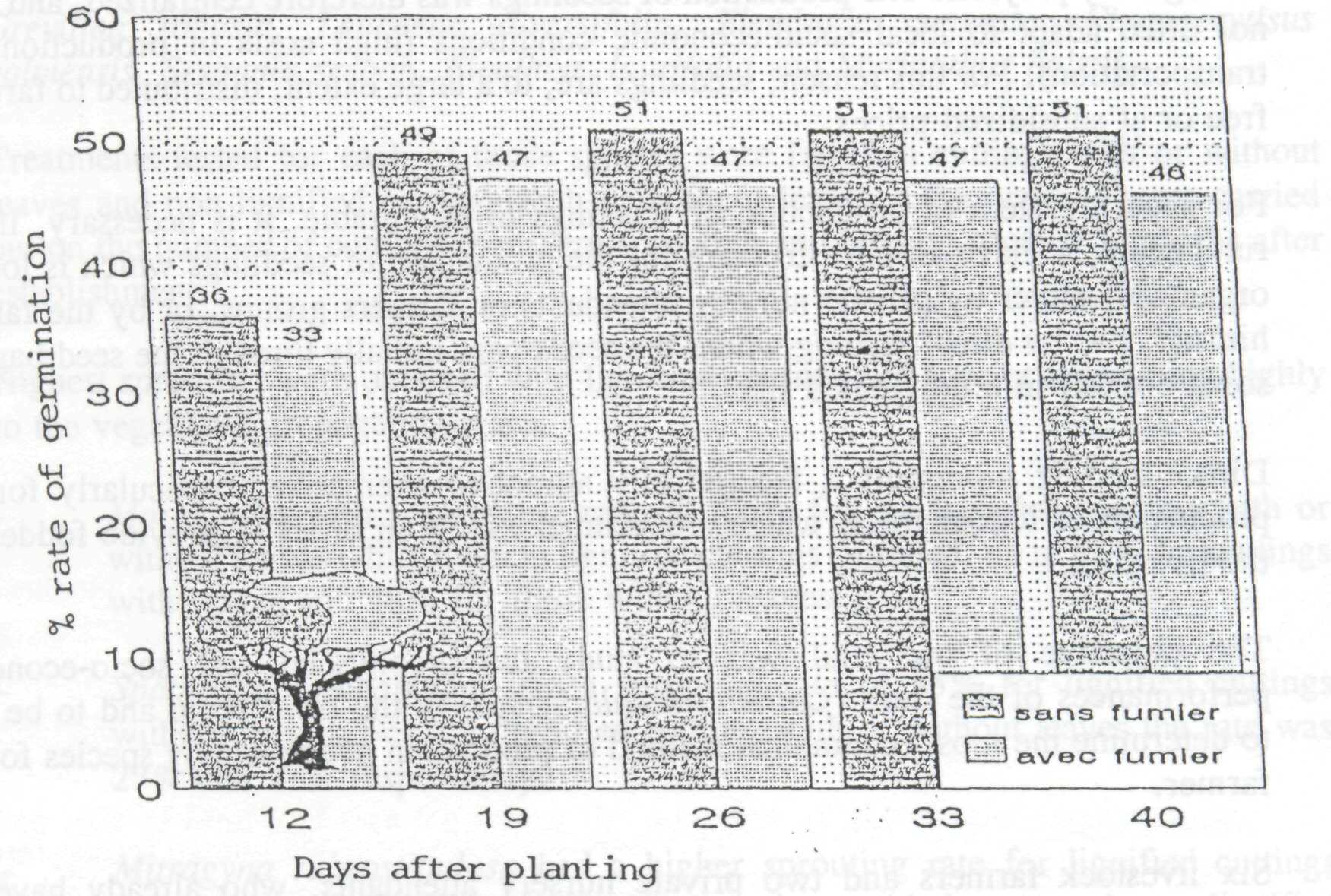
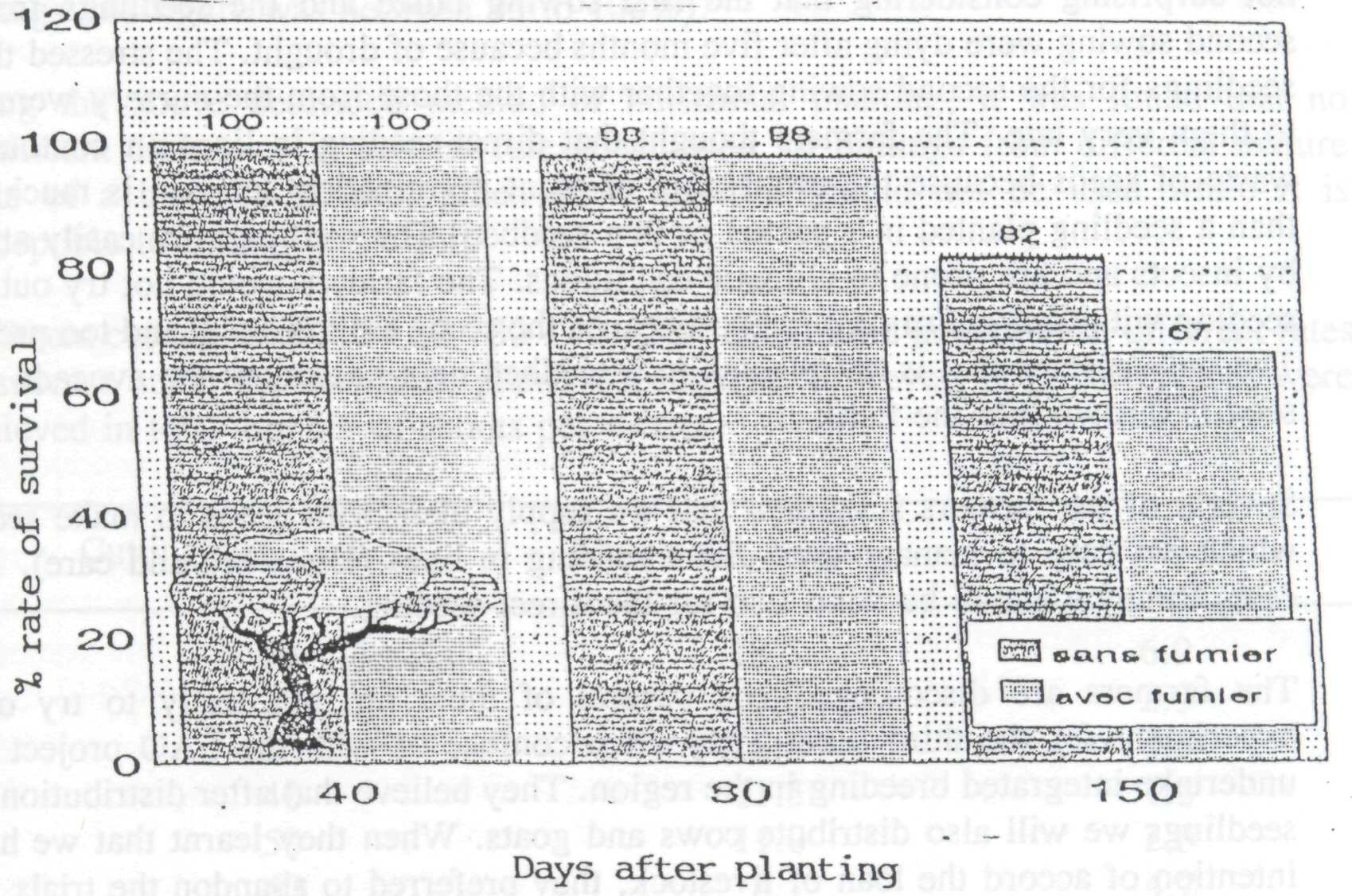
Each trial was 10m long, between-row spacing of about 0.5 m and three seeds were sown in each hole; the trials were laid out on contour lines fortified with Setaria or Tripsacum. In November 1992, all the nursery attendants received 1500 seeds to plant in order to be distributed in January 1993. The first sowing was done in November 1992. Unfortunately, the first three days following the sowing remained dry and most of the seeds dried up and did not germinate. The rate of germination on all farms was extremely minimal (less than 5%)(figure2). After consultations with the farmers, it was decided to repeat the direct seeding experiment. For the second sowing in January 1993, the system remained the same. The rate of germination of more than 40% for the seeds sown was generally better than the first time. The survival rate (100% after 40 days) was between 67% and 82% five months after planting (figure 3).
The first nurseryman was able to produce 800 seedlings after thinning out and planting. The second had no production because he did not follow the instructions as regards the pretreatment of the seeds which he overheated and destroyed. In the second sowing, we abandoned the trial at the production of seedlings in the nursery because these were ready for transplanting just at the beginning of the dry season and had no chance of survival. Nevertheless, we decided to distributed the seedlings produced in the nursery, even though we were not able to make a direct comparison between the performance, since the first sowing was not practically carried out.
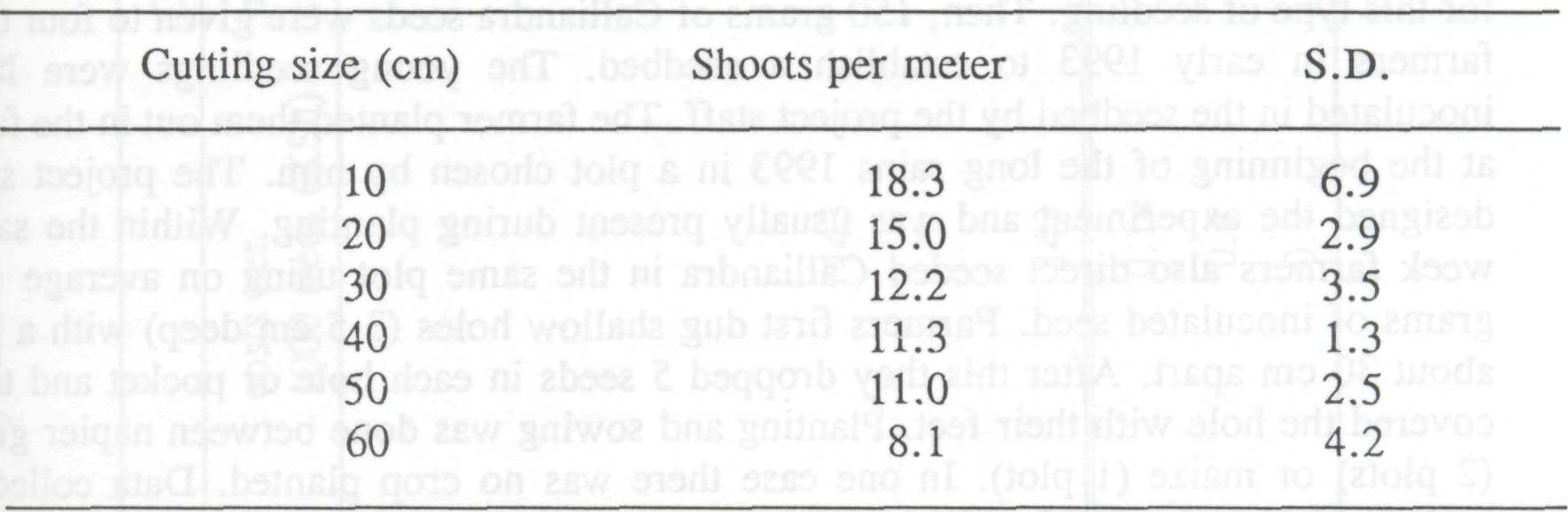
The seedlings from the direct seeding trial are generally stronger than those obtained from the nursery. The seedlings from the first sowing were double or, more or less, the same in height. The seedlings with manure which had survived the first sowing, were generally stronger than those without manure. For the plants from the second sowing, the difference between the no-manure seedlings and those with manure was brought out in the vegetative aspect. The first ones had a yellowish colour and the leaves started fading, while the second group of seedlings were green and strong. On the other hand, on the less fertile soils and/or those exposed to the sun, the seedlings (with manure or without manure), did not practically grow right at the beginning of the dry season in May, while they had a height of 5 and 15 cm. Five months after planting, they started to dry up and die. For the farmers who had sown next to the older lines of Tripsacum and Setaria, it was noted that the plants grew slowing because of the root competition. None of the farmers had thinned out their plants because they had noticed that the plants were drying up. Normally, the farmer does not manage the plants. If there was any weeding done on one farm or the other, this is because he did the weeding at the same time as cultivation. Generally, the farmers prefer seedlings from the nursery to direct seedling. This is not surprising considering that the first sowing failed and the seedlings from the second sowing were dying after five months because of drought. The stressed that the seedlings for the second sowing together with the those from the nursery were given to them very late. The farmers thought that direct seeding in lines on contours is a waste of seeds because the probability of plant germination survival is much lower than a seedling planted in a pocket or in a seedbed. The seedlings are easily attacked by insects and are prone to climatic conditions. The farmers would not try out direct seeding with Calliandra calothyrsus because the seeds are too small and too previous. The only species that is not planted in a seedbed or a nursery is the avocado whose seed is thrown into the field. Several of the farmers suggested that we supply them with seeds to make seedbeds which are easy to manage than direct seeding in lines (less work and care). In any case, thinning has to be done also for the direct seeding. The farmers are discouraged and several of them are not ready to try out the experiment for the third time. They often confuse us with the FAO project which undertake integrated breeding in the region. They believe that after distribution of the seedlings we will also distribute cows and goats. When they learnt that we had not intention of accord the loan of livestock, they preferred to abandon the trials. Vegetative propagation of Moms alba The mulberry tree (Morus alba) has great potential for animal fodder production. Both digestibility and crude protein content of the leaves is high, while the green material, fresh or dried, is very palatable to a diverse group of animals, including goats, cattle, rabbits, pigs and Tilapia fish. Morus alba originates from Asia, but was introduced to most parts of East and Central Africa, mainly for fruit production and for silk rearing. This species tolerates a wide variety of climates and soils, and can be found in East Africa between 250 and 2500 masl. Rooting of cuttings is the most common propagation practice. In the coffee zone of Embu District, Kenya; an average of one out of seven farmers has one or more mulberry trees on the farm. This indicates that propagation material is plentiful in this area. The experience, however, is that not all mulberry cuttings always take and the duration between planting of cuttings and production of roots is long. Other methods of vegetative propagation of Morus alba were explored through five experiments. Good results were achieved if cuttings of 20 and 30 cm length were buried horizontally in a shallow furrow. Compared to vertical or inclinated (45°) planting with success rates (cuttings with shoots and roots) between 50 to 60% after six weeks, horizontal planting of cuttings resulted in nearly 100% take, while cuttings showed a better and faster production of roots and shoots. Formation of callus tissue at the bottom side of cuttings seems to attribute to this difference in success rate (10 to 50% of cuttings planted vertically or inclinated produced callus; for horizontally planted cuttings this figure was between 95 to 100%). Using the above described method of horizontal planting, it was found that no significant difference in success rate is achieved for cuttings from different mature parts of a branch. Mature, green stem material should not be used while it is susceptible to rotting in the soil. Different cutting sizes (10-20-30-40-50-60 cm) did not result in different rates of success under the horizontal planting technique. However, large differences were achieved in total number of shoots per metre:
Because of the variability in shoot production for 10 cm cuttings it seems most appropriate to use 20 or 30 cm cuttings if many shoots are required. Results from one experiment showed a good take rate for cuttings stored for up to three weeks after collecting them from the tree. Stored cuttings were wrapped in newspapers. Finally, one farmer in the Embu area agreed to plant, at the beginning of the rains in October 1992, a line of 30 metres with mulberry following the horizontal planting technique. At that time information about optimal size of cuttings was still missing. The farmer planted on his own and used quite large cuttings of about 1-1.5 metre. After 3 weeks the first shoots appeared and after 13 weeks a total of 138 shoots were counted with an average height of 56 cm. Four weeks later the average height was 78 cm. Costs comparison of two establishment methods of Calliandra on farms
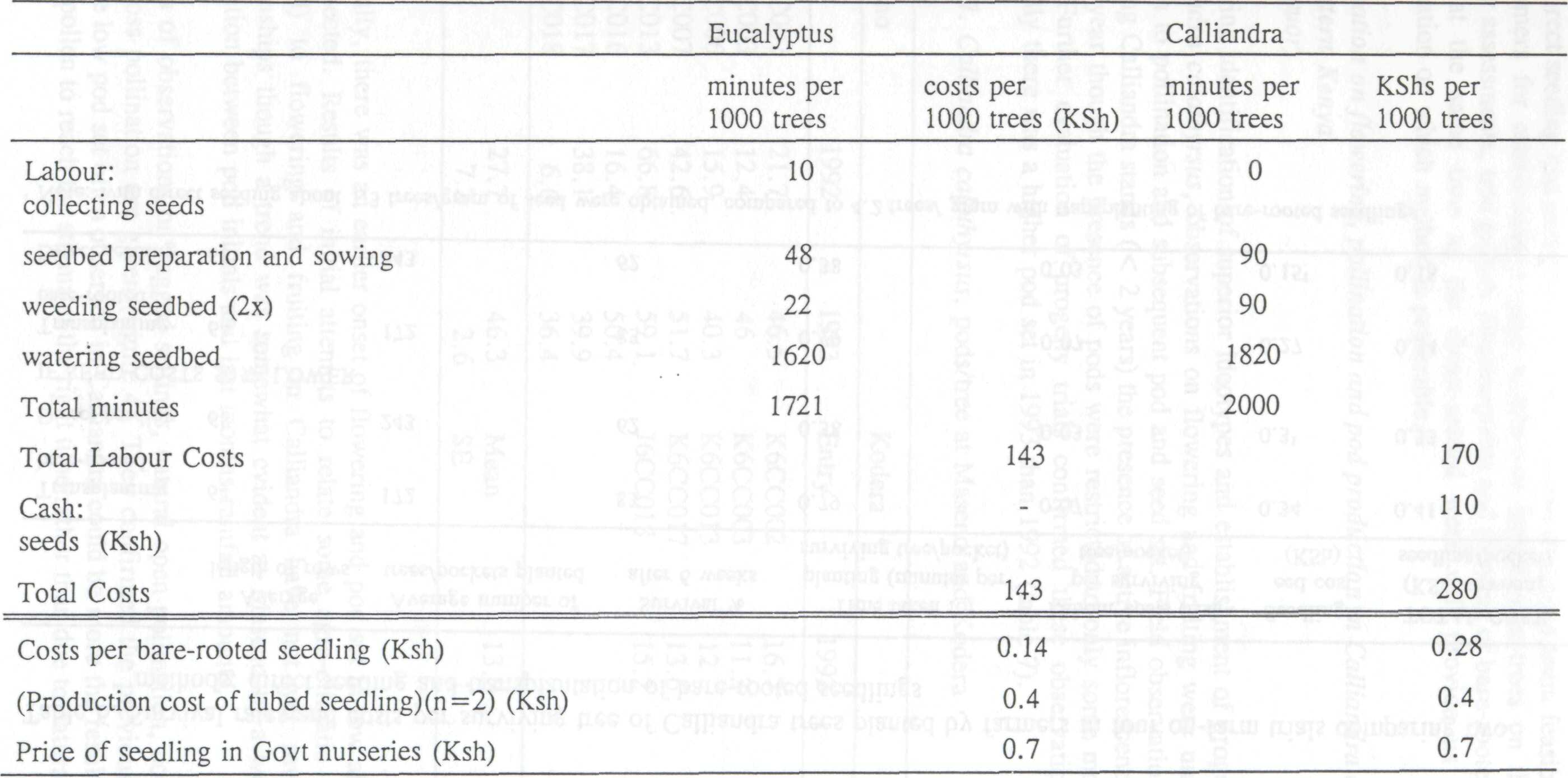
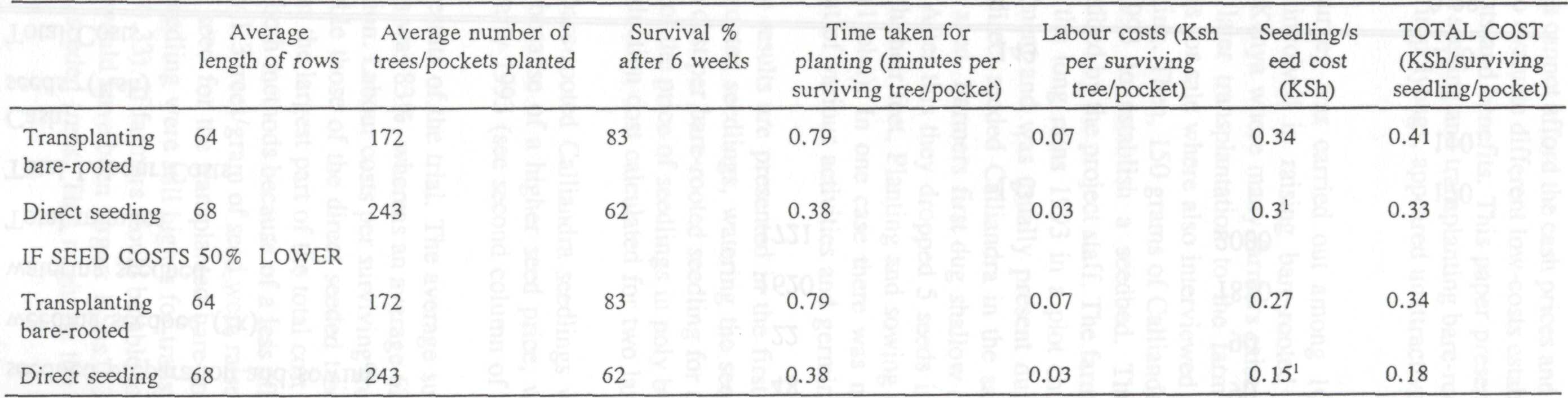
in Western Kenya Farmers in western Kenya are becoming increasingly interested in establishing Calliandra calothyrsus hedges on their farms, mainly for fodder and soil-erosion control. Large numbers of seedlings are needed to establish such hedges. For example, a recent analysis showed that about 1500 Calliandra trees are needed to feed one dairy cow the whole year around. Seedlings are available from government nurseries but farmers cannot afford the cash prices and transport costs involved. There is therefore a need to evaluate different low-costs establishment methods with farmers and compare the costs and benefits. This paper presents results of two methods tried on four farms: direct seeding and transplanting bare-rooted seedlings. A third method, producing seedlings in polybags, appeared unattractive to farmers because of the cash cost involved. First an informal survey was carried out among 10 farmers using a checklist to establish the costs involved in raising bare-rooted seedlings. This is a common practice in western Kenya where many farmers raise Eucalyptus or Cypress trees in small seedbeds for later transplantation to the farm. Three farmers who produce seedlings in polybags for sale where also interviewed to calculate the production cost for this type of seedling. Then, 150 grams of Calliandra seeds were given to four trial farmers in early 1993 to establish a seedbed. The young seedlings were later inoculated in the seedbed by the project staff. The farmer planted them out in the farm at the beginning of the long rains 1993 in a plot chosen by him. The project staff designed the experiment and was usually present during planting. Within the same week farmers also direct seeded Calliandra in the same plot using on average 110 grams of inoculated seed. Farmers first dug shallow holes (3-5 cm deep) with a hoe about 30 cm apart. After this they dropped 5 seeds in each hole or pocket and then covered the hole with their feet. Planting and sowing was done between napier grass (2 plots) or maize (1 plot). In one case there was no crop planted. Data collected included labour input of various activities and germination and survival rates. The informal survey results are presented in the first column of table 5. It appears, for producing bare-rooted seedlings, watering the seedbed is the largest cost factor. The total production cost per bare-rooted seedling for the farmer was only KShs 0.14, which was one fifth of the price of seedlings in poly bags sold by the government and one third of the production cost calculated for two large-scale private nurseries. Production cost of bare-rooted Calliandra seedlings were about double the price of Eucalyptus, mainly because of a higher seed price, which for Calliandra was KShs 400 per kg during early 1993 (see second column of table 5). Table 6 shows the results of the trial. The average survival rate for the transplanted bare-rooted seedlings was 83 %, whereas an average 62 % of the sown pockets showed at least one germination. Labour costs per surviving tree for the transplanted seedlings were more than double those of the direct seeded trees. However, costs of seedling or seed formed by far the largest part of the total cost per surviving tree. These were almost the same for both methods because of a less efficient use of seed in the direct-seeding method: only 1.3 trees/gram of seed were raised with direct seeding compared to 4.2 trees/gram of seed for the transplanted bare-rooted seedlings. However, total costs per surviving seedling were still higher for transplanted than direct seeded trees (KShs 0.41 vs KShs 0.33). If farmers would be able to get seed at 50% of the present price the difference would have been larger: KShs 0.34 for transplanted seedlings vs KShs 0.18 for direct-seeded trees. This might be the case when more seed becomes available.
Both direct seeding and transplanting of bare-rooted seedlings seem feasible methods for farmers for establishing a large number of leguminous trees on their farms. Farmer assessments, tree growth measurements and planting of bare-rooted seedlings sown at the same time as the direct-seeded trees will provide us with more information on which method is preferable. Observation on flowering, pollination and pod production in
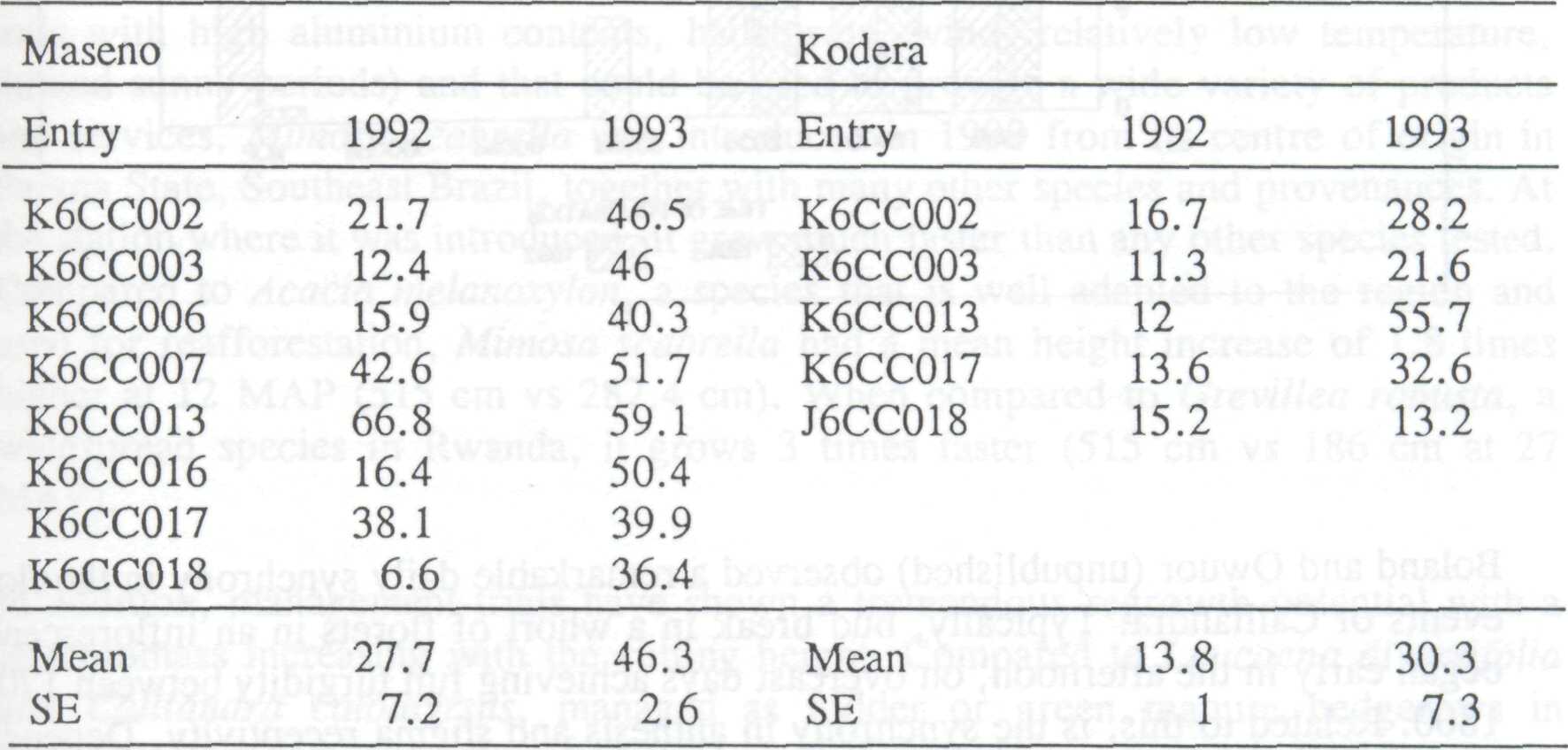
Calliandra calothyrsus in Western Kenya Following identification of superior ideotypes and establishment of progeny tests of Calliandra calothyrsus, observations on flowering and fruiting were undertaken in relation to pollination and subsequent pod and seed set. Field observations revealed in young Calliandra stands (< 2 years) the presence of active inflorescences for most of the year though the presence of pods were restricted to only some months in the year. Further evaluation of progeny trials confirmed these observations, though generally there was a higher pod set in 1993 than 1992 (table 7).
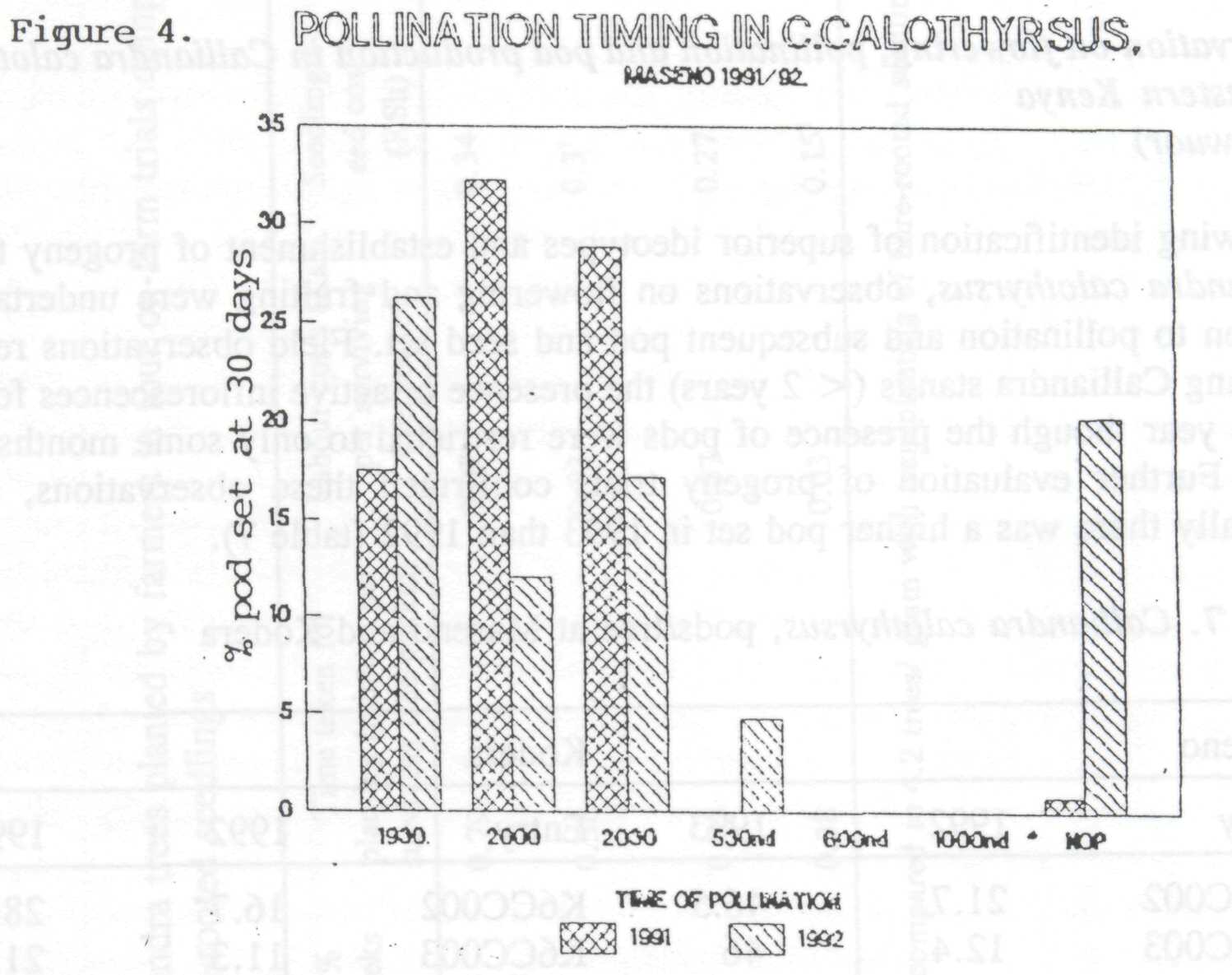
Generally, there was an earlier onset of flowering and pod set in low altitude sites, as expected. Results of initial attempts to relate some agro-climatic factors (e.g rainfall) to flowering and fruiting in Calliandra have not yet revealed clear relationships though a trend was somewhat evident at Maseno of a weak positive correlation between pod initials and last months rainfall amounts. Results of observations on bagged selfings, natural open pollination, controlled self and cross pollination are given (figure 4). They confirmed the previous conclusion that the low pod set often observed in Calliandra could be more the result of inability of the pollen to reach the stigma at the right time rather than due to natural pollination with self incompatible pollen. Deliberate artificially-bagged self pollinations achieved appreciably high pod set, though this was highly variable.
Boland and Owuor (unpublished) observed a remarkable daily synchrony in the floral events of Calliandra. Typically, bud break in a whorl of florets in an inflorescence, began early in the afternoon, on overcast days achieving full turgidity between 1700 -1800. Related to this, is the synchrony in anthesis and stigma receptivity. Dependant on daytime temperature range, anthesis occurred between 1900 - 2230 hours, with receptive stigma closely following within less than 30 minutes thereafter. At anthesis, the pollen of Calliandra, which is a compound pollen (Rao and Dug, 1972), was easily harvested by shaking the inflorescence. The polyads were collected into a petri dish held below the inflorescence, by gently shaking the inflorescence. The receptive stigma was sticky, and this could be tested by touching the stigma surface with a dissection needle or forceps. Such an action led to the metal object sticking to the stigma surface (electro-static action?) if the stigma was receptive. Pollination timing observations confirmed that the optimal time for pollinating Calliandra was between 1930 - 2030 hours, though the duration of stigma receptivity could extend to early morning 05:30 - 06:30 hrs, but not 2 days thereafter. Observations on potential pollinators were undertaken both by daytime and by night. Honeybee (Apis mellifera) foraging patterns, including frequency and duration of visits, as well as polyad load, was recorded. These observations did not as yet resolve the question of pollination mechanisms in Calliandra, as there appeared little correlation between these parameters and pod and seed set obtained in Calliandra stands associated with frequent bee visits. This question, as well as others providing information on site factors influencing seed yield, determination of outcrossing rate in this and the other species of interest to the programme, are fundamental to rational seed orchard establishment and management. Mimosa scabrella: A species with a great agroforestry potential for
the acid highlands of Rwanda In order to diversify the sources of woody species that are adapted to the extremely marginal conditions prevailing in the Crete Zaire-Nile (high elevation, very acidic soils with high aluminium contents, hailstorms, wind, relatively low temperature, limited sunny periods) and that could be used to provide a wide variety of products and services, Mimosa scabrella was introduced in 1990 from its centre of origin in Parana State, Southeast Brazil, together with many other species and provenances. At the station where it was introduced, it grew much faster than any other species tested. Compared to Acacia melanoxylon, a species that is well adapted to the region and used for reafforestation, Mimosa scabrella had a mean height increase of 1.8 times higher at 12 MAP (515 cm vs 282.4 cm). When compared to Grevillea robusta, a widespread species in Rwanda, it grows 3 times faster (515 cm vs 186 cm at 27 MAP). In addition, management trials have shown a tremendous regrowth potential with a leaf biomass increasing with the cutting height. Compared to Leucaena diversifolia and Calliandra calothyrsus, managed as fodder or green manure hedgerows in Rwerere, Mimosa scabrella established in Gakuta had, over a period of 2 years, a productivity of 1.5 times higher than that those species. Compared to 7 other woody species (Hagenia abyssinica, Alnus acuminata, Chamaecytisus palmensis, Acacia mearnsii, Acacia kod) and to Setaria sple.nd.ida, Mimosa scabrella was as palatable as Setaria, and had the lowest rejection rate among the woody species tested on young goats. The mean crude protein content (Nitrogen content) is equivalent to or higher than that of all other species that have been tested and released so far by the extension projects (Sesbania, Leucaena and Calliandra). A supplementary feed of 33% and 66% respectively, of Mimosa scabrella added to Setaria splendida - base feed resulted in weight gains of 47 and 51 g/day/animal as opposed to 30 g/day/animal recorded for Setaria alone on local breed of young goats 5 to 6 months old. Finally, Mimosa scabrella has been released to several farmers by the ICRAF/ISAR Project as part of its on-farm research activities and through the collaborative development projects. The species confirmed its good potential and is highly popular among farmers, who compare it to Leucaena and Sesbania, in terms of plant type and uses. At the Central Agroforestry Seed Service, the trend in seed requests shows the clear impact that the ICRAF/ISAR Project has had on the release of that species by the various development projects. In 1990, the species was not even mentioned in the requests for seeds received by the Central Seed Service. Early in 1992, ICRAF/ISAR placed an order for 1 kg of seeds in order to produce the plants to be distributed to the various projects. To-date, the Central Seed Service has already distributed 3 kg of seeds to 6 development projects. The major constraint to widespread utilisation of the species is seed availability. Three years after the first introductions were established, no sign of flowering and fruiting has yet been observed at Gakuta, and the seed shipments to Kigali are very costly (US$ 260/kg of seeds). Current efforts are now geared towards solving this fructification problem. For that purpose, the ICRAF/ISAR project has set up a multi-locational trial to test 14 provenances in 3 different sites (Rubona, Rwerere and Gakuta), so as to select the ones that are best adapted to the range of agroforestry conditions found in the country and to identify provenances or sites where fructification could take place. Given the importance and the proven potential of this species for the acid highlands of the network, the MPT programme should give particular attention to the issue of seed fructification and multiplication, and use ICRAF's sub-stations and collaborating networks in South America, to make the species-related information available to the scientists on the African continent, with emphasis on phenological aspects. The effect of Rhizobium-Mycorrhiza double inoculation on Leucaena
diversifolia using two different types of soils The objective of trial is to verify the effect and opportunity of double inoculation on Leucaena diversifolia at Rwerere and Rubona soils. The experimental design used is that of a Cris-cross with a combination of 2 factors: the type of soil used which is that of Rubona and Rwerere and the type of inoculation which is 2 strains of Rhizobium: Tall 1145 (CIAT, 1967) and a local Isolate and one strain of mycorrhiza: Glomus versiforme. These treatments were compared with the controls without Rhizobium or mycorrhiza. The number of plants per experimental plot is 9 and the number of replicates 3. With regard to the nodulation, results indicate that local strains exist in the two types of soils but they induce lower nodulation. Tall 1145 selected for acid soils improves significantly nodulation particularly for Rwerere soils (very acid) where it seems more competitive than the local strains. Regarding biomass productivity, simple or double inoculation improves productivity only on the acid soils of Rwerere. At Rubona, inoculation seems not necessary. The influence of 3 Frankia strains on growth and productivity of
Casuarina equisetifolia and Casuarina cunninghamiana Three strains of Frankia: aCT287 supplied by CSIRO, CcB, originating from Harvard University and crushed nodules collected from Casuarina equisetifolia plantations at KEFRI (Kenya Forestry Research Institute), have been tested on Casuarina equisetifolia and Casuarina cunninghamiana and compared to the control without any inoculation. Trials have been conducted in the nursery. The experimental design is that of are completely randomised blocks with 3 replicates and 4 treatments. Each experimental plot account, for 50 plants. The laboratory pregerminated seedlings have been pricked out in pots on 5th May 1992 and inoculation done one month later. Results obtained 10 months after pricking out in the nursery indicate both for Casuarina equisetifolia and Casuarina cunninghamiana that higher diameter and height growth as well as productivity are obtained with the CcI3 strain followed by the aCT287. Inoculated plants growth is better than that of control plants. From the nodulation point of view, the percentage of plants with nodules is again higher for CcB strain (80% for Casuarina equisetifolia and 84% for Casuarina cunninghamiana) with the mean number of nodules per plant of 3.12 and 3.12 respectively for Casuarina equisetifolia and Casuarina cunninghamiana. The second strain giving better results is æCT287 with 36 and 32% of plants with nodules for Casuarina equisetifolia and Casuarina cunninghamiana. Controls without inoculation did not bear nodules at all. Higher total biomass productivity (fresh matter) harvested after 10 months are obtained with CcI3 strain with respectively 14.9 g/plant and 17.35 g/plant for Casuarina equisetifolia and Casuarina cunninghamiana followed by «CT287 strain which gives for the 2 species 14.06 g/plant and 16.65 g/plant. The productivity of non inoculated controls is 9.6 g/plant for Casuarina equisetifolia and 13.8 g/plant for Casuarina cunninghamiana. Biological performance and farmers' evaluation of promising MPTs on
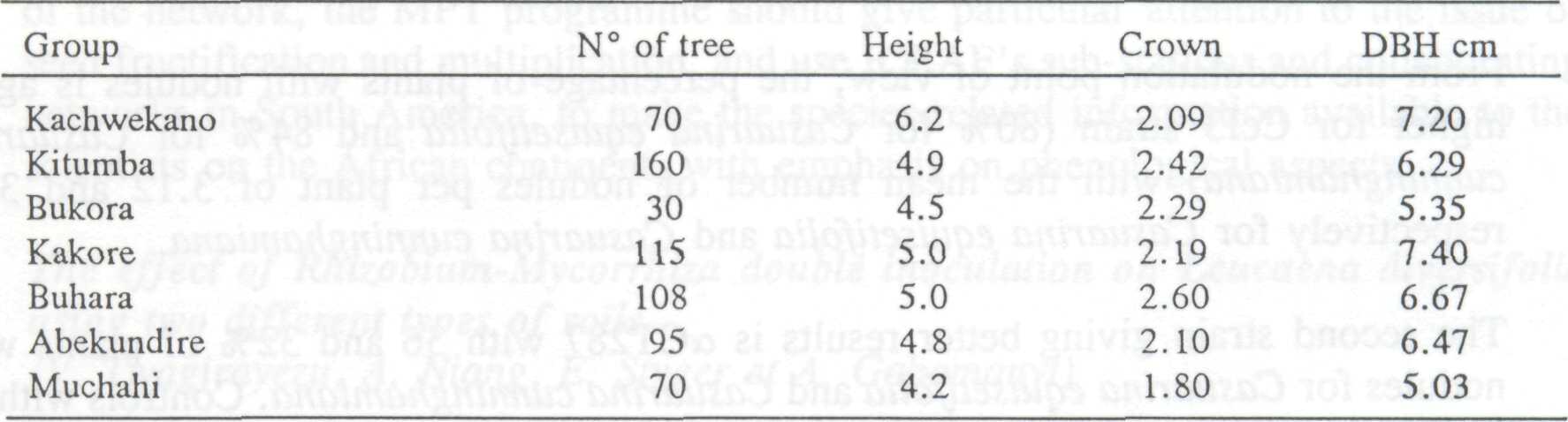
farms in Kabale In 1990, the AFRENA Project initiated on-farm trials. Grevillea robusta and Calliandra calothyrsus were distributed to two villages coordinated by locally elected councils and to five women's groups. A total of 40 farmers were visited in all the seven groups. Measurements of MPTs included heights, crowns and diameter breast height. Farmers attitudes and observations, crops grown, and management of MPTs, were observed. Monitoring and evaluation have been done in all groups. The objective was to observe farmers' response to agroforestry technologies and to identify constraints which may interfere with the adoption of them. A survey at the end of the first rains after planting of MPTs, indicated that seedling survival ranged from 87.4% in Buhara to 100% in Muchahi for Calliandra. Survival of Grevillea seedlings ranged from 93% in Kitumba to 100% in Kachwekano and Muchahi. The average heights of Grevillea 36 months after planting ranged from 4.2 m in Muchahi to 6.2 m in Kachwekano (table 8). The crowns ranged from 1.8 m in Muchahi to 2.6 m in Buhara while the DBH ranged from 5.03 cm to 7.4 cm in Kakore. The average increase in height of Grevillea on-station is about 2 m per year, while Grevillea on-farm increase is about 1.8m. Calliandra has been pruned twice by about 60% of the farmers. The prunings were used as firewood and green manure by 90% of the farmers.
Table 8. Growth performance of Grevillea 36 months in metres after planting on farms in Kabale District
Management of Grevillea consisted of pruning the branches to reduce the shading effect. Ninety percent of the farmers observed that Grevillea had no negative effect on the crops grown the previous season. Seventy-five percent of the farmers used Grevillea prunings as firewood and green manure, and are expecting to use the mature tree for timber. Farmers compare Grevillea with Eucalyptus favourably, in terms of growth and straight poles. The compatibility of Grevillea with crops was observed by farmers in all plots, and makes Grevillea a superior multipurpose tree. Farmers observed that Calliandra planted on terrace risers results in stabilised bunds. Results indicate that nearly 64% of farmers had less than 3 acres of land comprised of many widely scattered plots. Grevillea and Calliandra were planted on terrace risers to stabilise bunds and to control soil erosion. Grevillea was also commonly planted on plot boundaries. Limited sources of seed and seedlings have greatly restricted the establishment of multipurpose tree nurseries and planting on-farms. The most important management problem of planting trees on terrace risers and on boundaries was protection of newly established seedlings. During the dry periods after crops have been harvested, goats, pigs and cows are free to graze on most of the plots. The loss of MPTs at the end of rains in most groups was attributed to these animals. Gender discrimination makes it difficult for women to plant trees. Thirteen percent of farms lost their multipurpose trees because men uprooted them after they were planted by women. It appears that many men either fear that women will claim ownership of the land on which the trees were planted or they object to women making management decisions concerning the use of it. Forty percent of farms where, MPTs were planted, are managed by women although some of these receive assistance from men for some specific operations such as pruning Grevillea. Planting of MPTs was limited to home gardens or near fields. Management and carrying of potted seedlings on steep terrain makes it difficult to plant MPTs on far fields. It is also more difficult for farmers to ensure the security of more remotely planted trees. Fanners' assessment of promising upperstorey MPTs in the food
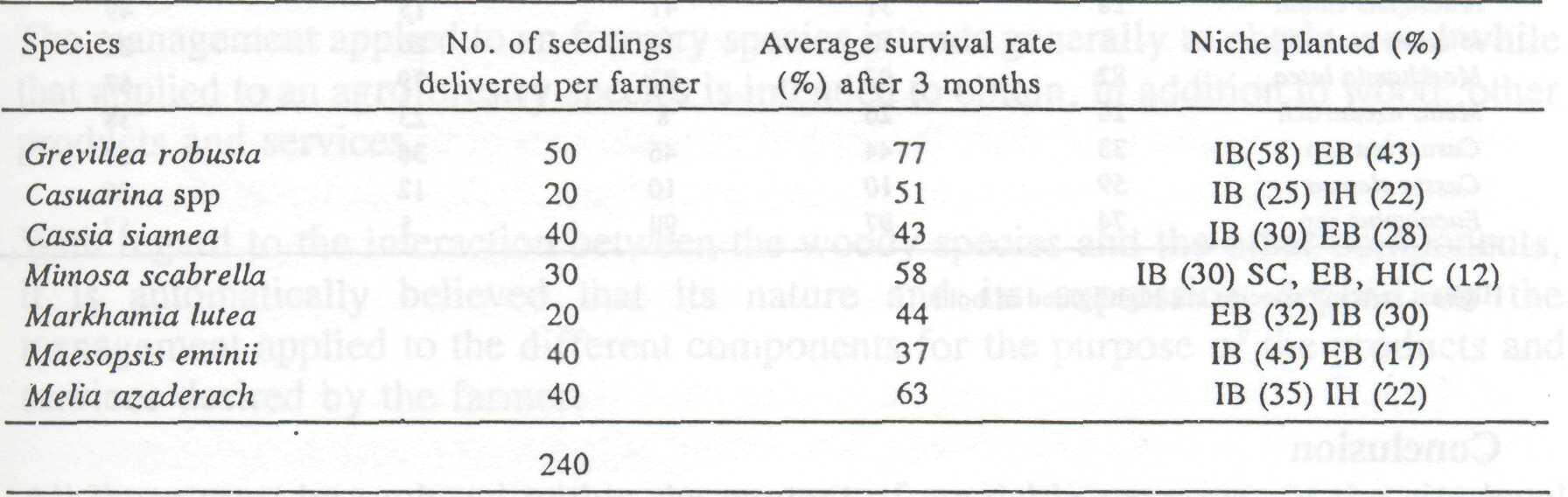
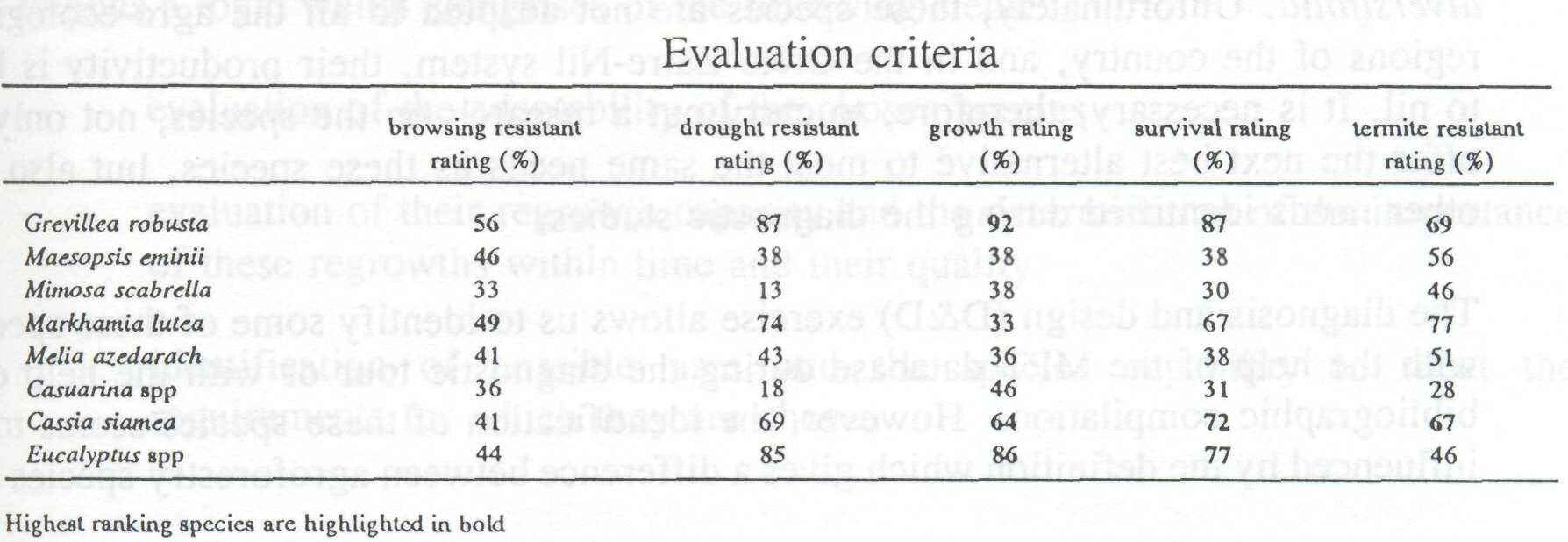
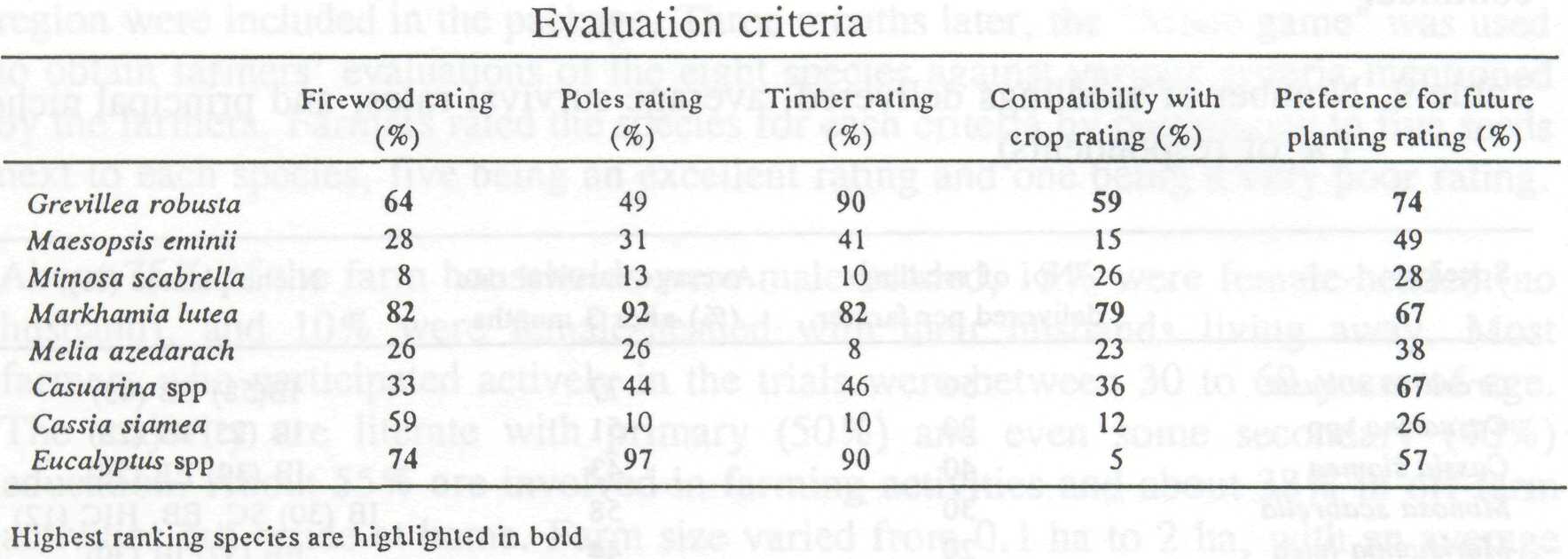
crop-based land-use system in Western Kenya In a farmer-designed tree planting trial in Western Kenya, 40 farmers are conducting their own experiments with eight upperstorey multipurpose tree species which appeared promising in on-station tree screening trials in the East and Central Africa highlands. Farmers, together with researchers, assess the species for their potential growth and use in the food-crop based land-use system of western Kenya. The objectives of the exercise are to: (i) observe how farmers experiment with new tree species, where they plant them, how they manage and use them, and problems they encounter; (ii) elicit their evaluation criteria and evaluation of the species; (iii) assess how the species perform on farmers' fields and under farmer management, as compared to on-station plots; and (iv) provide feedback to on-station scientists on researchable problems. There are seven species in the trial: Grevillea robusta, Casuarina cunninghamiana, Cassia siamea, Mimosa scabrella, Markhamia lutea, Maesopsis eminii and Melia azaderach. Eucalyptus spp., which is well known by farmers, was used as a control in the evaluation interviews. Farmers were selected from among the members of the women's groups with which the Maseno on-farm team is working. The species were presented to farmers at a group meeting. The characteristics and uses were discussed and farmers were taken to on-farm trials to observe some of the species. Indigenous species existing in the region were included in the package. Three months later, the "Mbao game" was used to obtain farmers' evaluations of the eight species against various criteria mentioned by the farmers. Farmers rated the species for each criteria by putting one to five seeds next to each species, five being an excellent rating and one being a very poor rating. About 75% of the farm households were male-headed, 15% were female-headed (no husband), and 10% were female-headed with their husbands living away. Most farmers who participated actively in the trials were between 30 to 60 years of age. The majority are literate with primary (50%) and even some secondary (40%) education. About 55% are involved in farming activities and about 38% in off-farm activities but reside at home. Farm size varied from 0.1 ha to 2 ha, with an average of 1 ha. Tree planting took place during the beginning of the long rain season (April through May) of 1992. On average, 20 to 50 trees of each upperstorey trees were delivered to each farmer (table 9). The decision on where to plant the trees was either made by the male farmer (74%) or by the female farmer (32%). Various members of the household participated in planting: male farmers (69% of households), female farmers (25%), and children (61%). Most species were either planted along the internal or external boundaries (table 9), except Casuarina species, which was planted inside the homestead by a majority of farmers. Mimosa scabrella appeared in almost all the niches. Tree survival ranged from a high of 77% for Grevillea robusta to a low of 37% for Maesopsis eminii (table 9). The principal causes of poor survival were drought, late planting, termites, and browsing. Species evaluation across a number of criteria were elicited from the farmers. Table 10 shows farmers' growth ratings: Grevillea robusta and Eucalyptus rated highest on growth, Cassia siamea and Casuarina spp. also performed well. Farmers also rated the species according to five other criteria relating to performance and three relating to end uses (tables 11 and 12). Since some of the species were not previously known to the farmers, they were unable to rate them. All of the species received about the same rating on susceptibility to browsing. Grevillea robusta, Eucalyptus, Markhamia lutea, and Cassia siamea received the highest ratings on drought resistance and survival; Markhamia lutea and Grevillea robusta were the most termite resistant and competed the least with crops. Markhamia lutea, Eucalyptus spp. and Grevillea robusta were considered to have the best firewood qualities whereas Eucalyptus spp. and Markhamia lutea were rated as the best for poles and timber. For preference for planting in the future, all of the species were rated highly except Mimosa scabrella, Melia azaderach and Cassia siamea because they were considered to be of less economic value by farmers. This study has provided key preliminary information for MPT improvement specialists on farmers' desired tree species traits, management problems, and preferred species and niches. Monitoring of farmers preferences concerning the trees and their uses will continue.
Table 11. Species rating on various initial performance criteria elicited from the farmers (percentage farmers rating good and excellent)
Conclusion
Research approaches to increase diversity and use of the MPTs
A widespread idea of agroforestry is that the most appropriate species for the hedges technologies for fodder, mulch or soil conservation are the shrub species. In Rwanda, therefore, the number of shrub species used to meet these requirements is limited to 3-4 species: Calliandra calothyrsus, Sesbania sesban and Leucaena leucocephala or diversifolia. Unfortunately, these species are not adapted to all the agro-ecological regions of the country, and in the Crete Zaire-Nil system, their productivity is low to nil. It is necessary, therefore, to carry out a research on the species, not only to offer the next best alternative to meet the same needs as these species, but also for other needs identified during the diagnostic studies. The diagnosis and design (D&D) exercise allows us to identify some of these species with the help of the MPT database during the diagnostic tour or with the help of a bibliographic compilation. However, the identification of these species seems to be influenced by the definition which gives a difference between agroforestry species and forestry species. The difference between forestry and agroforestry species is of 2 types at least:
The management applied to an forestry species intends generally to obtain wood while that applied to an agroforestry species is intended to obtain, in addition to wood, other products and services. With regard to the interaction between the woody species and the other components, it is automatically believed that its nature and its expression depend on the management applied to the different components for the purpose of the products and services desired by the farmer. All these must be replaced within the context of available resources at the site level (land, etc.) The phenomena of osmosis should, therefore, be created between the forestry and agroforestry species with the basis of converting forestry species into agroforestry species either by the physical manipulation of the tree (cutting) to enable it to produce other products like wood, or simply, by removing it from its natural forest environment and putting it in an agricultural and forestry environment, subjecting it to other types of constraints and allowing it to react differently. This new approach opens up other perspectives and allows us to consider the forest environments could be considered as potential reserves for the agroforestry species and also to allow us to ask ourselves: why not also examine the existing agroforestry potentials in the local forestry species or other adapted exotic forestry species rather than introducing exotic agroforestry species only. In the AFRENA-Rwanda project, these two strategies were used at the same time and were oriented towards the research on hedges, taking into account the importance of the erosion problems in the country. The diversity of the management methods applied follows a logic which comprises of the following steps:
The determination of the coppicing capability can be done at the same time as the general selection of the species while adding supplementary seedlings on which the varied management methods can be applied. Thus, several species like Grevillea robusta, Alnus nepalensis, Schima wallichii, Croton megalocarpus, Acacia mearnsi, Mimosa scabrella, Polysciasfulva, Alnus acuminata, Hagenia abyssinica, showed that when cut lower and horizontally, they are capable to produce a high leafy biomass and to form dense hedges. The following step allows for the evaluation of the quality of this biomass (woody and/or leafy), to obtain information on the performance of some species in the general selection trial and to compile this information for a bibliographic review centred on the species in order to identify the type of possible uses of these species. This exercise needs to end in a grouping of species according to their different functions and categories of possible uses (mulch, fodder, conservation of soils, stakes) with the possibility of a species falling under several categories. The next to last step envisaged is to determine the most appropriate species for the given use. It is at this stage, too, that bromatological analyses and the appetability tests can be carried out on the species suspected to be fodder species while taking care to compare them to those renown fodder species in the zone. The same reasoning can be applied to the mulch, and the conservation of soils. The last step is aimed at evaluating the level of optimum efficiency of the species when it is used in the purpose for which it is intended when they are placed int he system context. Dissemination of promising MPTs - issues and approaches: Experiences
from Southwest Uganda The AFRENA Uganda programme initiated simple on-farm observation trials in Kabale District in April 1990. During the first year of this activity, MPT seedlings were distributed to two villages coordinated by RCls or village councils. Seedlings were also distributed to seven women's groups. In 1991, with a grant from UNDP's Africa 2000 Network, the AFRENA programme embarked on a programme to assist ten women's groups to establish their own tree nurseries, to train the members as needed in nursery management and agroforestry, and to encourage them to establish their own agroforestry systems on the members' farms. An economic evaluation of the nursery work, an assessment of the biological performance and growth of seedlings planted on members' farms, and an evaluation by the farmers of the benefits and problems they encountered were completed elsewhere. This paper outlines a number of additional issues which have resulted from AFRENA Uganda's experience in disseminating agroforestry species and technologies to farmers' groups in South West Uganda. Agroforestry is one of many possible "entry points" for community development. Women's groups were first created for many different purposes, and very few were formed solely because of their interest in agroforestry. Many factors limit groups and their members from achieving their objectives. Most of these factors have little to do with agroforestry directly. They are general barriers to development and affect adoption of agroforestry along with virtually all other group activities. However, to ignore them is to ensure the failure of efforts to adopt agroforestry technologies by groups. Some key factors that have arisen in AFRENA's experience are outmoded concepts of leadership, inadequate decision-making skills, difficulties in including men in group activities, dependence on inputs from donors, expectations of land purchases by external sources of funding, lack of seed for MPTs, subsidized prices for seedlings, lack of training in vernacular, the need for less dependence on ICRAF and AFRENA for development assistance, and the lack of planning skills. Questions are raised concerning the potential role of ICRAF and AFRENA in addressing these issues recognizing that to ignore them will greatly limit the eventual adoption of agroforestry technologies. |