An e-publication by the World Agroforestry Centre
IMPERATA GRASSLAND REHABILITATION USING AGROFORESTRY
AND ASSISTED NATURAL REGENERATION 

|
|
An e-publication by the World Agroforestry Centre |
|
IMPERATA GRASSLAND REHABILITATION USING AGROFORESTRY
|
|
|
Introduction Imperata cylindrica grasslands are found throughout Southeast Asia. They are perpetuated by Imperata?, ability to resprout quickly after fire. Fire is the main reason that tree plantations fail on Imperata grasslands. Local people may be the cause of fire, but they are also the best partners to prevent it. They rehabilitate Imperata grassland rehabilitation when they own the trees and crops that will replace Imperata. The more valuable the new land use is to local people, the harder they will work to maintain it and prevent fire. This manual is written to benefit people who live in an environment dominated by Imperata and who want to replace grasslands with agroforestry and forests. The techniques covered in this manual are most useful for medium-sized grasslands, confined to one village or community. The manual's content and format is designed for extensionists, agriculturists, foresters, development workers, and others who can assist communities and smallholders to design and implement Imperata rehabilitation activities.
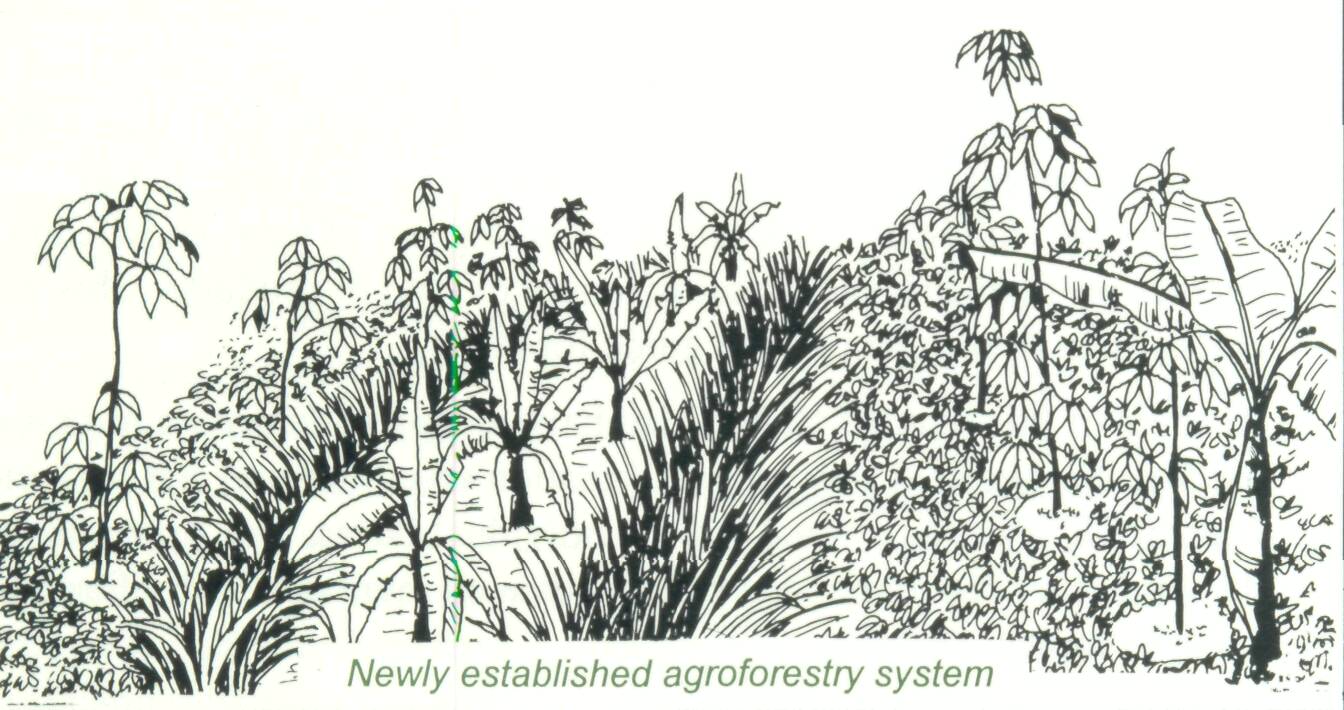
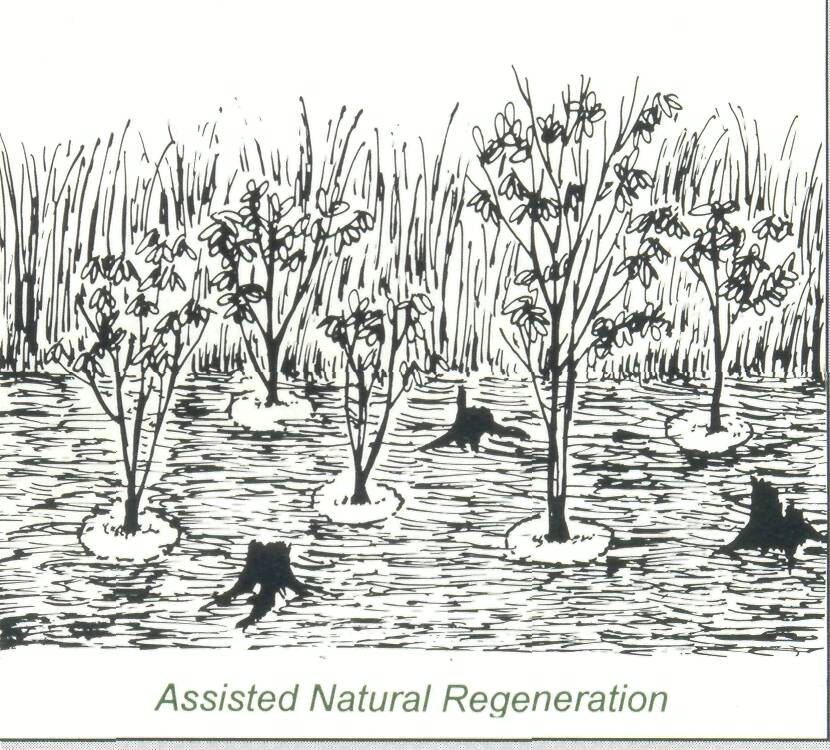
Agroforestry practices involve a close association of trees and shrubs with crops, animals, or pastures. The combination of species often uses growing space more fully than simple tree plantations, creating more shade and reducing the growth of grass. A community of small landholders can implement intensive and complex agroforestry systems over a large area, thus rehabilitating large grasslands. This manual covers how to establish agroforestry in Imperata grasslands, but it is not a complete textbook on agroforestry. Extensionists are encouraged to get additional information on specific agroforestry systems and crops. Assisted Natural Regeneration (ANR) stimulate the growth of natural saplings and seedlings. Regeneration is assisted b; fire suppression, weed control, and attracting wildlife that spread seeds. ANR may include enrichment planting. On appropriate sites, forest cover can be re-established more quickly and cheaply with ANR than with conventional reforestation. ANR has often been implemented in partnership with local communities, making use of local knowledge and species preferences, and granting tenure of land or products. This manual contains an introductory field guide for ANR.
Readers of this manual should also have a copy of Imperata Management for Smallholders5. It provides information on cultivation and herbicides to control Imperata as a weed within individual farms. See Appendix A for this and other recommended references with more detailed information on specific topics.
Footnote__________ 5 Imperata Management for Smallholders, An Extensionist's Guide to Rational Imperata Management for Smallholders. 1996. Indonesian Rubber Research Institute, Sembawa Research Station, Indonesia; Natural Resources Institute, UK; and International Centre for Research in Agroforestry. 56 p. |