An e-publication by the World Agroforestry Centre
WORKING PAPER NO. 36

|
|
An e-publication by the World Agroforestry Centre |
|
WORKING PAPER NO. 36 |
|
|
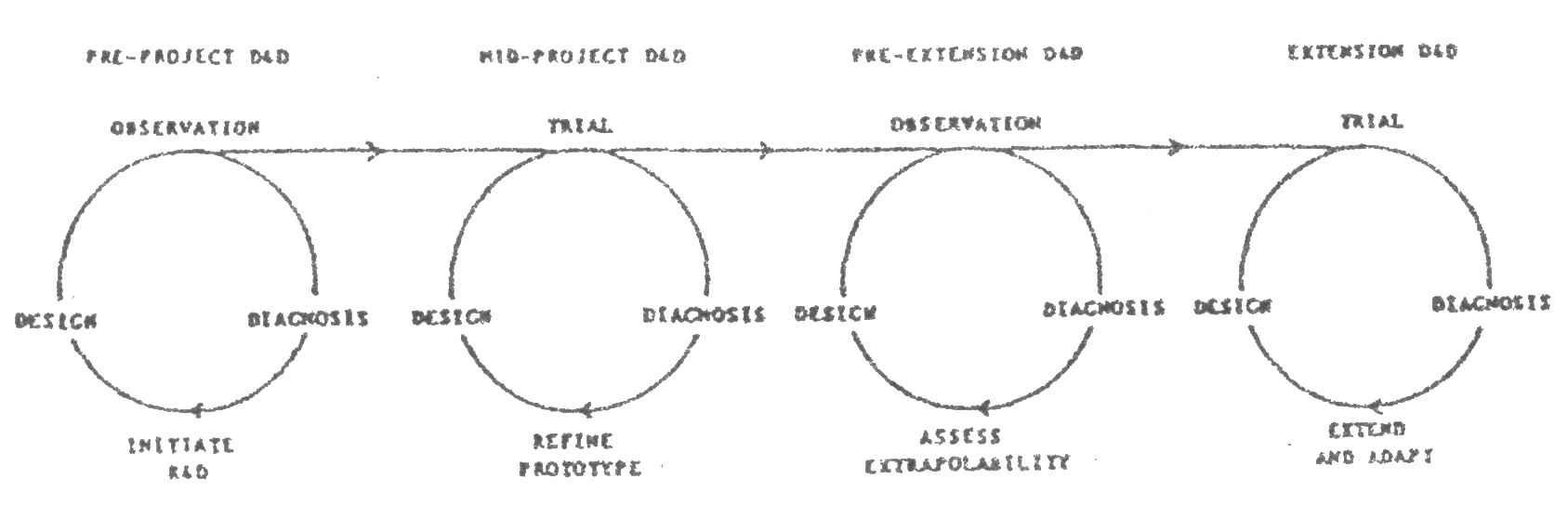
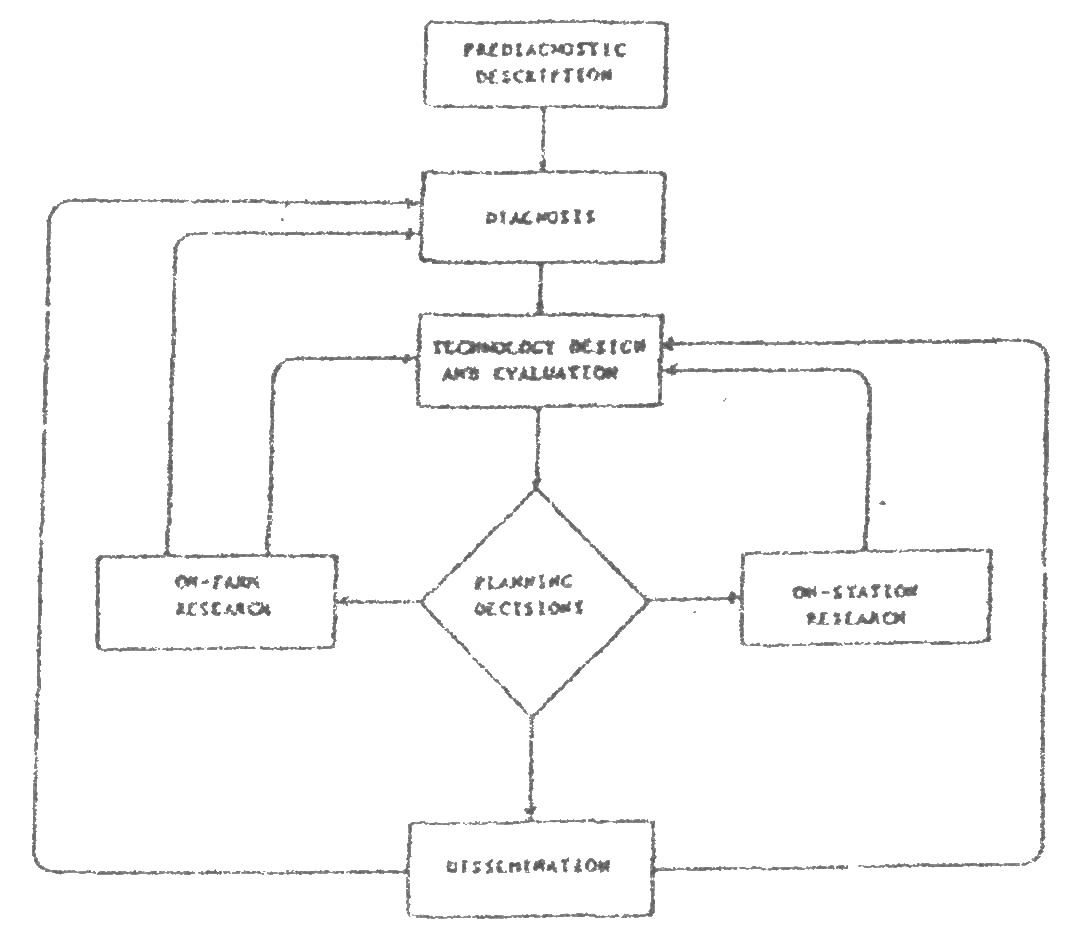
the kathama case study The most direct source of ideas, questions and results has been the continuous contact with farmers and the surrounding community in Kathama sub-location, Machakos District, Kenya. The Kathama project is a small methodology development project initially based on farming system surveys and on-farm trials of agroforestry innovations (Raintree, 1983; Vonk, 1983b). The project has continued (on a limited scale) as a vehicle for testing implementation approaches and variable scale D&D (Rocheleau,1985b; Rocheleau and Hoek, 1984). This case illustrates the evolution of the methodology in general (Figs. 1 and 2) and the self-correction of the project and technology designs in response to social, economic, biological and physical performance criteria. The experience in this community also illustrates the general importance of social factors in existing production systems, and in the planning, testing and dissemination of new technologies. In particular, the project has called our attention to the need for designs that transcend the household and the individual farm (both within and without), according to both social and ecological criteria. More importantly, this case has provided the stimulus and the opportunity to refine diagnoses and to re-design technology trials to reflect intra-household and community level criteria within an AF systems project. The experience from both the original trials and the variable-scale follow-up are presented in order to demonstrate the empirical and practical basis for the methodological and research policy conclusions which follow.
|